New - Just Now
$300,000
Active
3
Beds
3
Baths
1629
Sqft
0.13
Acres
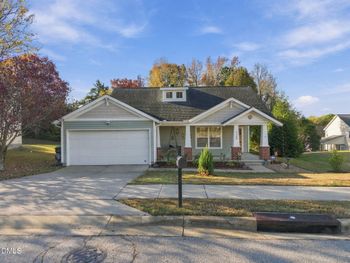
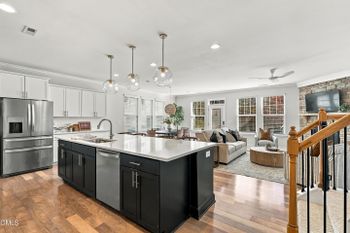
3515 Streams Of Fields Dr, Raleigh, NC 27604
MLS#: 10204095



Raleigh rents fell 15% after adjusting for inflation between 2022 and 2025, according to a new Pew analysis.
Your landlord might still raise the rent at renewal. Meanwhile, a townhome with a mortgage payment close to your current rent could cost considerably more once taxes, insurance and association dues are included.
In its November 16 report, The Pew Charitable Trusts connects Raleigh's rent decline to a wave of housing production following earlier changes to the city's zoning and parking rules.
For someone weighing a lease renewal against buying, the question is how the actual rental offer compares with the full cost of a home they'd consider purchasing.
Pew's finding covers 2022 through 2025. It measures the change in rents after accounting for inflation, not a 15% reduction in the dollar amount every tenant paid.
That difference matters if you're looking at your own rent history. A monthly payment that increased slightly over those years could still represent a decline after inflation.
In 2021 and 2022, Raleigh changed its land-use rules to allow more housing types in residential areas. The city also eliminated minimum parking requirements for new development in 2022.
Raleigh calls many of these options missing middle housing: duplexes, triplexes, townhouses and smaller apartment buildings that fall between detached houses and large apartment complexes.
According to Pew, Raleigh permitted an average of 3,301 housing units annually from 2017 through 2020. That increased to 5,731 annually from 2021 through 2024, a 74% rise.
Permits authorize construction rather than count completed homes. Pew separately reports that 16,884 housing units were produced in Raleigh during 2021–2024.
Pew attributes part of the expanded supply and subsequent rent improvement to the earlier zoning and parking reforms. The findings don't establish that those policies alone caused the entire decline.
The effects also reached beyond newly built apartments.
Pew found that older, less expensive Class C apartments experienced particularly large rent decreases between 2023 and 2024.
Additional housing can create competition that affects rents at existing properties, not just newly built apartments.
But Pew's historical finding doesn't tell you what a comparable apartment costs in November 2026.
If your lease is coming up for renewal, the first number to examine is the landlord's actual offer.
A more recent snapshot comes from Apartment List's November 2026 Raleigh Rent Report, which uses October rental data.
The report estimates Raleigh's overall median rent at $1,370 per month.
Its modeled medians are $1,207 for a one-bedroom apartment and $1,376 for a two-bedroom apartment.
Rents declined 0.3% during October and 0.1% over the preceding 12 months in that series.
These are nominal, modeled citywide figures. Pew's 15% decline is inflation-adjusted and covers an earlier three-year period. Neither measure establishes what a particular landlord should charge.
A two-bedroom apartment near your workplace could rent for considerably more than the citywide median. Another property farther away might advertise less but introduce transportation costs that offset the difference.
Compare your renewal with similar available rentals in the area, including the services and amenities you're actually getting.
And read the complete offer. A lower advertised rent doesn't always mean a lower cost over the lease.
Suppose a landlord advertises a hypothetical apartment at $2,000 per month with one month free on a 12-month lease.
Without the concession, the annual base rent would be $24,000.
With one free month, the tenant pays $22,000 in base rent over the lease, averaging approximately $1,833 per month.
But the tenant may still owe $2,000 during most payment months, depending on how the concession is applied. The discount may also disappear at renewal.
Confirm the concession in writing, including which unit and lease term qualify and how payments are scheduled.
Compare mandatory fees, parking, pet charges and utilities over the full lease term, along with any moving expenses. Budget separately for deposits, which require cash upfront but may be refundable under the lease's terms.
HomesRaleigh's Renting an Apartment in Raleigh guide covers the broader lease and location considerations.
If your renewal compares favorably with similar rentals, staying could be a reasonable option. Whether buying would improve your finances is a separate calculation.
Suppose you're renting a two-bedroom apartment and considering a Raleigh townhome. Its estimated mortgage principal-and-interest payment may look close to your rent. Before comparing the two, account for:
Financing terms also matter.
For context, Freddie Mac's November 12 national survey reported a 7.11% average 30-year fixed mortgage rate for its conventional purchase-loan benchmark involving excellent credit and 20% down.
That's a dated national average, not a rate quote for a particular Raleigh buyer.
Even if a lender approves the mortgage, the payment may not leave enough room for repairs, other obligations and savings.
The Consumer Financial Protection Bureau distinguishes what a lender may approve from what a household can comfortably afford.
Buying also offers possibilities that renting doesn't, including paying down mortgage principal and building equity. Those potential benefits come with upfront costs, ownership responsibilities and uncertainty about future property values.
A useful rent-versus-buy comparison therefore needs the actual purchase price and financing terms of a home you'd consider buying.
Someone planning to relocate in a year or two faces a different rent-versus-buy calculation from a household expecting to stay for many years.
Buying requires upfront cash, and selling later can introduce additional transaction costs. A longer ownership period may give a household more time to pay down its mortgage and spread those costs over more years.
Future rents, home values and interest rates remain uncertain, so neither outcome is guaranteed.
HomesRaleigh's Buying vs. Renting guide provides the deeper ownership-period and break-even framework for working through that decision with actual numbers.
Start with your actual lease-renewal terms and property-specific estimates of the purchase and ownership costs for a home you would seriously consider buying.
If you're curious about what ownership would look like, you can browse Raleigh townhomes for sale or use the budget-fit home search to compare properties across Raleigh, Cary and Durham.
Check each property's price, association responsibilities and expected ownership expenses before comparing it with your lease. If you'd like help reviewing a specific purchase alongside your rental costs, you can also contact HomesRaleigh.
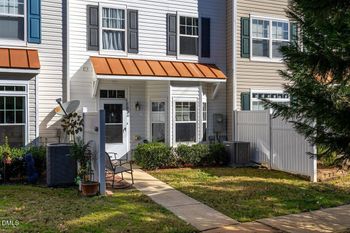
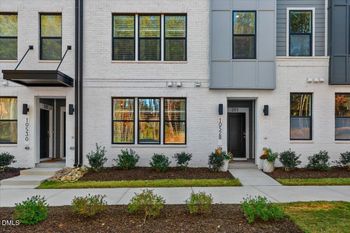
Conceptual illustration of townhomes and apartments.