New - 30 Mins Ago



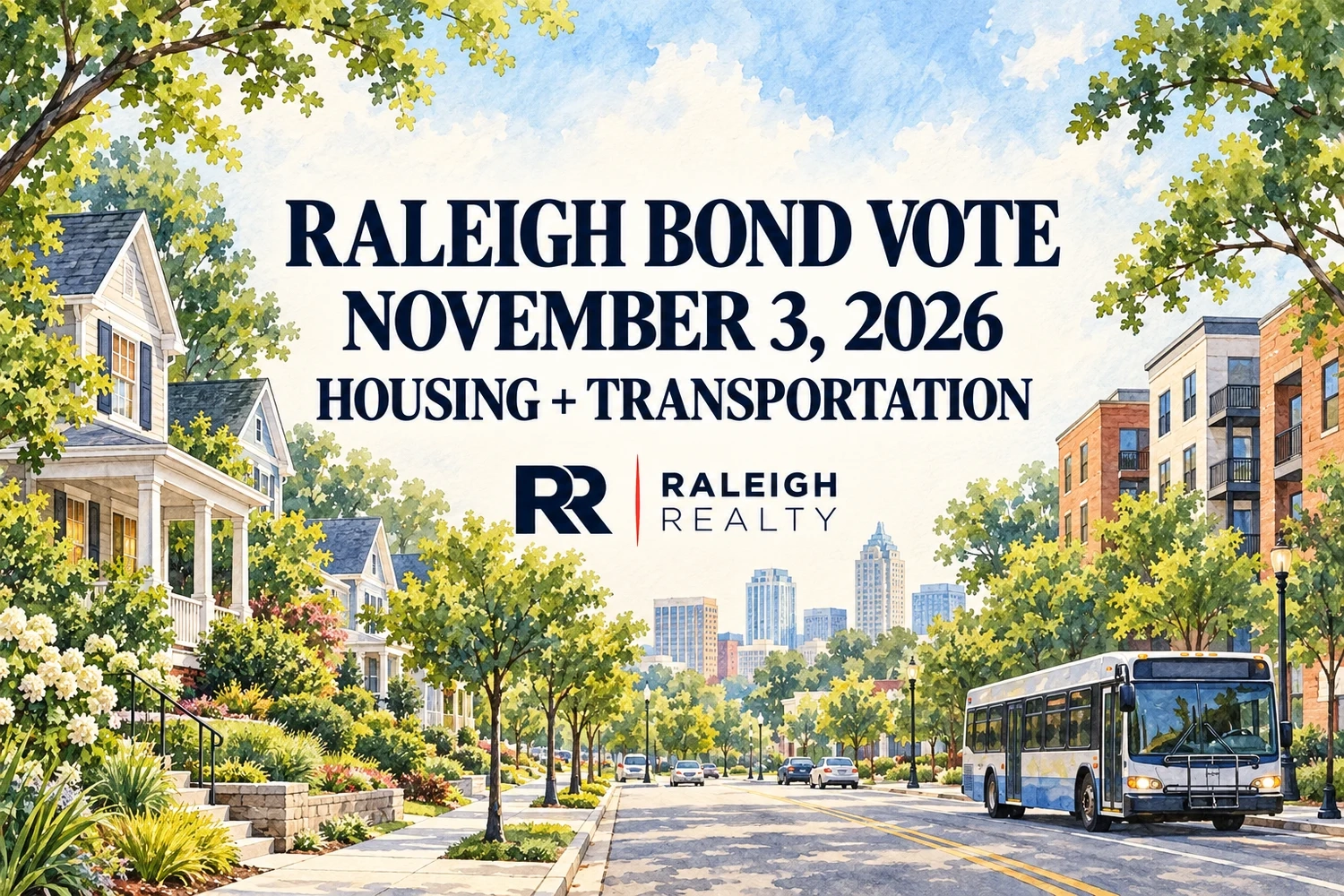
Raleigh voters will decide November 3, 2026, whether to authorize $101.5 million for housing and another $101.5 million for transportation.
Two separate bond questions. Two different spending plans.
But for a family trying to afford life in Raleigh, those expenses have a way of showing up in the same household budget.
Consider what happened just days before the vote.
On October 21, construction began on 200 income-restricted apartments at 326 Chapanoke Road, near Wake Tech's Public Safety Education Campus and the planned Southern Wake Bus Rapid Transit corridor.
The apartments are expected to be completed in 2028.
The transit service? Raleigh's current schedule anticipates a 2028–2029 launch, depending on federal funding and final design.
That means a household could potentially move into an affordable apartment before the planned nearby transit service begins. The rent might fit its income, but getting to work, school or childcare could still require a car or a less convenient trip.
Chapanoke is already funded separately. Neither proposed November bond is paying for its construction.
An affordable address doesn't necessarily mean an affordable daily routine.
The October 21 groundbreaking announced by Wake Tech marked the start of a nearly $58 million development adjacent to its Public Safety Education Campus.
According to Raleigh's project announcement, Chapanoke Apartments will include 66 one-bedroom, 86 two-bedroom and 48 three-bedroom homes.
They'll serve qualifying households earning between 30% and 70% of area median income, commonly called AMI. Actual income limits depend on household size and the applicable program.
At least 30% of the apartments will be reserved for qualifying low- and moderate-income Wake Tech students. Enrollment alone won't guarantee an apartment.
The city also identifies 40 supportive-housing apartments for residents with disabilities and 10 homes for referrals through city-supported programs. Those designations may overlap, so they shouldn't be treated as separate groups that can simply be added together.
The apartments will remain income-restricted for at least 30 years.
For households struggling with Raleigh's rental costs, that represents a potential future option. But the announcements don't establish actual rents or an application-opening date.
Raleigh has committed $4.5 million, while Wake County has committed $7.1 million and a low-cost, long-term ground lease. Earlier college and county land arrangements date to 2021. Harmony Housing Affordable Development is the developer.
The Southern Wake BRT project is intended to connect downtown Raleigh and Garner along an approximately five-mile corridor, using a combination of dedicated bus lanes and lanes shared with other traffic.
The city's current plan identifies property acquisition in 2027 and construction in 2028. Its BRT FAQ places the anticipated service launch in 2028–2029, with timing dependent on federal funding and final design milestones.
Exact station locations haven't been finalized. Living near the mapped corridor wouldn't necessarily mean an easy walk to a stop; sidewalks and safe crossings will matter, too.
Imagine a Wake Tech student living at Chapanoke who also works an evening shift. Or a parent who needs to reach childcare before traveling downtown.
A future transit connection could be valuable. But its usefulness depends on the actual stops, service hours, transfers and return trip.
For trips today, GoRaleigh Route 7 South Saunders serves the broader corridor, with published timepoints including GoRaleigh Station, Pecan Road at South Wilmington Street and Purser Drive near Walmart.
That establishes current bus service in the area, not a verified door-to-door commute from Chapanoke.
Someone evaluating the location today can use the GoRaleigh trip planner to check actual starting points, destinations and schedules.
Eligible City of Raleigh voters—not Wake County voters generally—will decide the two general obligation bond orders independently. One could pass while the other fails.
According to Raleigh's official bond information and referendum fact sheet, the housing proposal would direct money toward several different needs.
The largest planned allocation, $57.6 million, is for affordable housing development and preservation.
Another $10.4 million would support homebuyer assistance and housing preservation, including aging-in-place needs and assistance for eligible buyers earning at or below 80% of area median income.
The city also proposes $21.5 million for major redevelopment of city-owned sites serving households across a variety of incomes, plus $12 million for homelessness response through Wake at Home.
That mix covers preserving existing homes, developing new ones, assisting eligible buyers and responding to homelessness. It isn't a $101.5 million payment program available to every buyer.
The transportation bond presents another mix of projects.
Of its $101.5 million, $51.5 million is proposed for road infrastructure, including Marsh Creek Road/Trawick Road-West, Ebenezer Church Road and general-purpose traffic lanes along the Southern BRT corridor that aren't eligible for federal funding. That allocation covers the road-project category, not Southern BRT alone, and wouldn't finance the entire transit system.
Another $40 million would support City Council-adopted transportation plans and programs, including walking, bicycling and safety improvements.
One initiative is Raleigh's Big Jump program, which envisions more than five miles of sidewalks and 50 miles of bikeways over five years. That's proposed work, not infrastructure already completed.
The remaining $10 million would support neighborhood traffic management and transportation partnerships.
A road project might affect driving; a sidewalk or safer crossing could make an existing bus stop easier to reach. A bikeway might offer another way to reach work or nearby services. Whether any improvement helps a particular address depends on which projects are built and where.
The city can also change planned spending allocations within the eligible purposes of each bond order. Voter approval would authorize borrowing, not automatically approve every listed project or construction schedule.
If one or both measures fail, City Council could seek other funding sources. Without sufficient funding, affected projects wouldn't proceed as currently planned. Additional project costs could also require grants, other city funds or revenue sources.
Raleigh's current financial plan estimates a $0 direct property-tax impact from the proposed bonds.
Beginning in fiscal year 2026, the city established a dedicated Debt Fund supported by existing property-tax and sales-tax revenues. Under its Steady State approach, Raleigh estimates it can borrow approximately $203 million every four years without an additional property-tax increase.
But the official ballot language also authorizes additional taxes sufficient to repay principal and interest if necessary.
The $0 estimate describes the city's current repayment plan; the ballot preserves its legal authority to levy taxes if needed. Bonds must be repaid with interest, and fluctuating property-tax and sales-tax collections could reduce future borrowing capacity. The estimate isn't a guarantee that taxes will never change.
Nor does the bond authorization determine an individual home's property-tax bill. That calculation involves assessed value, jurisdiction and applicable tax rates, which HomesRaleigh explains in its Raleigh and Wake County Property Taxes guide.
Imagine a Raleigh household comparing two homes. One has the lower monthly housing payment, but reliable trips to work would require a car. The other costs more each month, yet has practical access to employment, childcare and everyday services using transportation that already runs.
The lower-priced home could add vehicle payments, insurance, fuel, repairs and parking costs. Two adults working different shifts or heading in opposite directions might even need separate cars. The costlier home could reduce some of those expenses.
But that depends on whether transit actually serves the required destinations and schedules. Fares, walking distances, transfers, service frequency and return trips all matter.
A household with an early shift, a child who needs pickup at a certain hour or a workplace far from a bus route may find that keeping a car is still necessary.
Travel time and reliability matter alongside dollars. A route that leaves little flexibility for childcare, appointments or changing work hours may be difficult to use routinely. Proximity to future BRT can't establish monthly savings or make one Raleigh neighborhood cheaper overall.
The two bonds address different pieces of that calculation: housing options on one side, roads and safer transportation connections on the other. Whether those investments help a household depends on where projects are completed and which destinations they serve.
Residents searching for affordable rentals now can use Raleigh's existing Affordable Rental Housing resources, which link to NCHousingSearch and housing authorities.
Each program or property controls its own eligibility, application process and current availability. Those resources aren't applications for future Chapanoke apartments.
The city also has existing homebuyer assistance programs for qualifying first-time buyers earning at or below 80% of area median income.
Under specified conditions, these programs offer zero-interest deferred loans, with approved lenders applying on behalf of eligible borrowers. Income eligibility alone doesn't establish loan approval.
Raleigh's Enhanced Homebuyer Assistance program is funded through the 2020 housing bond, not the proposed 2026 measure.
For households considering ownership, HomesRaleigh's Buying vs. Renting, Cost of Living in Raleigh and First-Time Homebuyer Programs guides provide more detail on comparing expenses and available assistance.
Buyers comparing specific properties can also contact Raleigh Realty to discuss their purchase budget, locations and home-search options alongside the destinations they regularly need to reach. The brokerage doesn't determine public-housing eligibility, approve assistance or guarantee future BRT service.
Conceptual editorial watercolor of Raleigh-area housing and a street/transit connection. Not a rendering of Chapanoke Apartments, an approved bond-funded project or operating Southern Wake BRT.