New - 1 Hour Ago





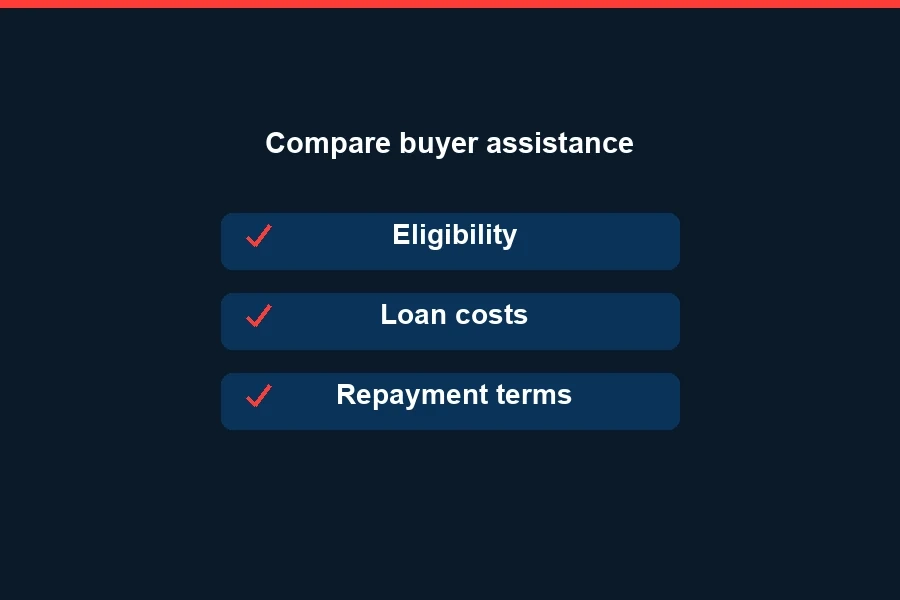
Raleigh and North Carolina offer buyer-assistance programs, but the amount available and the repayment rules depend on the program, your household and the home. Start by comparing the state's NC Home Advantage options with the City of Raleigh's assistance programs through a participating lender.
The useful question is not just “How much help can I get?” Ask how much cash you would need before and at closing, what your monthly payment would be, and what you could owe if you sell or refinance later.
Program information checked October 7, 2026. Confirm current rules and funding before relying on assistance for a purchase.
The NC Housing Finance Agency's NC Home Advantage Mortgage offers eligible first-time and repeat buyers a fixed-rate mortgage with down-payment assistance of up to 3% of the loan amount.
For example, 3% of a $300,000 loan is $9,000. That is a calculation, not an assistance award or a lender quote. The program uses the loan amount, not the home's purchase price, for this percentage.
The agency currently lists a $158,000 annual-income ceiling, a minimum credit score of 640 for most eligible properties and occupancy as your principal residence within 60 days of closing. Manufactured homes have a higher listed credit-score requirement. Those are starting checks, not a complete underwriting decision; a participating lender must confirm your eligibility and loan type.
The assistance has repayment conditions and is forgiven gradually at the end of years 11 through 15. Ask the lender for the agreement and the amount you would owe if you sold, refinanced or transferred the home before full forgiveness.
The agency's NC 1st Home Advantage Down Payment provides $15,000 to eligible buyers using an NC Home Advantage Mortgage. It is a zero-interest, deferred second mortgage, not an unconditional cash gift.
The published eligibility categories include buyers who have not owned a principal residence in the past three years, military veterans and buyers purchasing in designated census tracts. Additional income, purchase-price, credit and occupancy requirements apply. Ask the lender to check the current limits for your household and the property location; do not assume the general mortgage program's income ceiling is the limit for this option.
The agency states that forgiveness occurs at 20% per year at the end of years 11–15, reaching full forgiveness at the end of year 15. Ask about repayment and occupancy obligations before choosing the loan.
Have the lender compare the $15,000 option with the percentage-based assistance. Do not add the two amounts together unless the lender confirms the particular combination is allowed.
The City's homebuyer-assistance page, updated September 4, 2026, describes two programs for eligible first-time buyers earning no more than 80% of area median income:
These are zero-interest, deferred loans with conditions. The City says payment becomes due when the home is sold or is no longer the owner's primary residence.
Confirm the traditional program's price ceiling before choosing a home: the City's page currently shows $389,500 in its program description and $384,750 in its buying steps. Ask an approved lender or Raleigh Housing and Community Development which limit applies to your application.
The City requires a homeownership-class certificate and uses approved lenders to apply on eligible buyers' behalf. Check its current household-size income limits and geographic rules. A Raleigh mailing address alone does not establish eligibility.
Ask the lender to compare buying the same home with and without assistance, using the same purchase price and comparison date. For each option, request the first mortgage's interest rate, loan term, mortgage insurance, lender fees, estimated monthly payment and cash needed at closing. Ask how much of the down payment would come from your money and how much from assistance. If assistance adds a second loan, request its separate repayment and forgiveness terms in writing.
When available for your application, compare the Loan Estimates using the CFPB's explainer. Look at estimated monthly payments and cash to close, including costs that are not included in escrow. The largest assistance amount does not, by itself, establish the lowest cost for your plans.
Use these questions before selecting a loan:
Ask the lender to identify each program by name in the comparison. “Down-payment help” is not enough to tell you which repayment or eligibility rules apply.
Even if assistance reduces the money needed at closing, ask how you would pay for inspections, appraisal charges, moving and any agreed contract deposits or fees that are due earlier. Ask the lender which costs can be covered and when assistance becomes available.
Have your real estate agent and closing attorney explain the due-diligence fee, earnest-money deposit, deadlines and refund provisions in the proposed North Carolina purchase contract before you sign. Do not assume assistance pays these amounts or that you can recover them if the purchase does not close.
Keep money available for costs after the move as well. The CFPB's home-buying preparation guide asks buyers to plan for closing, moving, repairs and other ownership expenses. A smaller down payment does not eliminate those needs.
Find a participating lender through the linked agency or City program pages. Ask for a program comparison and written confirmation of the property-price range and cash you would need. Send financial documents only through the lender's secure process.
Then use our first-time buyer guide and Raleigh home-buying steps to plan the search, offer and closing.
Ask Raleigh Realty for help with your first home search. Tell us the towns you're considering, your price range and whether you've spoken with a lender about assistance. Our team can help you compare homes and plan the next steps; the lender and program administrator determine financing and assistance eligibility.