New - Just Now





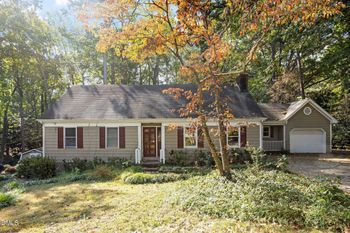
Conceptual editorial illustration of an older office property and parking area alongside a possible residential redevelopment under North Carolina's new law. Not an actual development or approved plan.
An older office property in Raleigh or Cary could now qualify for apartments without a council vote to change its zoning.
For someone buying a home near an office park or commercial property, that could also change how they learn about what's coming next door.
A developer who previously needed a public rezoning hearing may now be able to submit a residential development plan without asking elected officials to approve the change in use.
North Carolina created that possibility on August 11, 2026, when Governor Josh Stein signed Senate Bill 445. Section 43 of the law establishes new residential development rights on qualifying previously developed commercial, business and light-industrial land.
The law removes the need for a rezoning vote in certain cases. It doesn't eliminate development-plan review, construction standards or building permits.
And it doesn't apply to every commercial property in Wake County.
Cary has already published instructions explaining how eligible projects can proceed. Raleigh has its own development-review process, along with existing mixed-use districts where housing is already permitted.
For nearby residents, the practical consequence is that a future apartment proposal may appear in development-plan records without first appearing on a council rezoning agenda.
Section 43 of Session Law 2026-59 created G.S. 160D-703.1, effective August 11.
It requires qualifying municipalities to allow specified residential uses on previously developed property in districts zoned for nonagricultural commercial, business or light-industrial purposes.
Those uses include buildings governed by the North Carolina Residential Code, multifamily buildings containing more than four homes, and residential portions of mixed-use developments.
The key phrase is by right.
Ordinarily, if a property's zoning prohibits apartments, its owner may need to request rezoning before pursuing that development. The process can involve public hearings, planning recommendations and a decision by elected officials.
Under the new law, qualifying residential use is allowed without that discretionary zoning change.
Imagine an older commercial building whose owner wants to replace it with apartments.
If the property meets the statute's conditions, the owner may no longer need to convince the council to permit housing there. The proposed building still must comply with applicable development requirements before construction can begin.
And if the proposal combines apartments with commercial space, the nonresidential uses may still need their own permits or special-use approvals.
The property's history matters as much as its zoning.
The statute covers redevelopment involving renovation, demolition and rebuilding, or new construction on land where a building, pavement or another structure associated with an earlier use once existed.
A vacant former parking lot could therefore qualify even without a building standing on it today.
An untouched parcel that has never been developed is different. The law expressly excludes construction of a new primary structure on that kind of vacant land.
Property on or adjacent to a known contaminated site that hasn't been remediated is also excluded. The fact that land once had a commercial use doesn't, by itself, establish contamination.
There's also a provision governing building height.
On covered redevelopment sites, local zoning regulations cannot impose a maximum height below 60 feet.
That doesn't automatically authorize a 60-foot building, and it doesn't establish a universal 60-foot maximum. Other applicable site, design and safety requirements continue to matter.
The legislation uses population requirements that make its application unusually specific.
A municipality must have at least 80,000 residents and be located in a county with at least 1 million residents, based on the most recent federal decennial census.
Under the 2020 Census, Raleigh and Cary meet those thresholds. Charlotte is the other qualifying municipality identified in Cary's current guidance.
Apex, Garner and Morrisville fall below the municipal population requirement, even though they're located in Wake County.
A previously developed office property in Cary may therefore gain residential-use rights under Section 43, while a comparable property in Apex doesn't receive that particular statutory entitlement.
That doesn't mean apartments are prohibited on commercial land in Apex. Its own zoning may already permit housing, or a developer may have another approval route.
The new law changes what qualifying municipalities must allow. It doesn't replace every local zoning ordinance or create identical development rules across neighboring towns.
Cary's handling of the change provides a useful example.
Consider Regency Parkway.
An approximately ten-acre property zoned for office use at 12010 Regency Parkway has been the subject of a proposal for up to 245 apartments.
The project, Regency Multifamily, 24-REZ-06, appears in Cary's 2024 rezoning-case records.
The original application requested a change from office to multifamily zoning, with a proposed building height of 60 feet.
It also included proposed conditions involving electric-vehicle charging, green-building standards and workforce housing.
Those conditions illustrate the kinds of commitments that can accompany a traditional rezoning request.
In his October 12 account of a Cary Council work session, Mayor Harold Weinbrecht identified Regency Multifamily among four pending rezoning cases taking advantage of the new residential by-right provisions. His account reports that the case is using the new route; it is not a formal town eligibility determination or approval of a development plan.
Cary's older rezoning record still lists Town Council action as to be determined and describes the request for up to 245 homes with proposed conditions. Neither source establishes any later approval or which of those conditions, if any, became binding.
Cary has published guidance explaining how such a proposal would proceed.
Under the town's Residential By-Right Development guidance, an eligible owner doesn't need rezoning or Town Council approval for the residential use.
The owner may request a separate written eligibility determination, but that step is optional.
A pre-application meeting with Cary's Development Review Committee is required. Staff examines whether the property qualifies and identifies the standards that apply.
The applicant then submits a development plan for review and must obtain the necessary permits before construction. Cary says development-plan review ordinarily takes several months.
The new law has also raised a less obvious question: How many homes could be permitted in a commercial district that previously didn't allow residential development?
Cary staff's interim guidance, reproduced in Mayor Harold Weinbrecht's October 18 post, says existing residential density limits continue to apply where the zoning district already has them.
Other districts previously prohibited housing and therefore have no residential density standard.
For those districts, staff's interim position is that Cary cannot impose a new density standard without first amending its Land Development Ordinance.
That doesn't create an unlimited right to build apartments. Site layout, access, stormwater, building requirements and other applicable development standards still constrain a proposal.
And the interpretation isn't necessarily permanent. Cary is developing ordinance amendments, and its interim guidance can be updated or replaced.
As of October 14, the town reported receiving no qualifying redevelopment plans under the new process. That was the reported status on that date, not a claim that no applications arrived afterward.
An office building in Raleigh isn't necessarily gaining a residential use for the first time simply because the state law changed.
Under Raleigh's currently posted allowed principal-use table, multi-unit housing is permitted in several mixed-use zoning districts.
Those include Office Mixed Use (OX), Neighborhood Mixed Use (NX), Commercial Mixed Use (CX) and Downtown Mixed Use (DX).
For properties where housing is already permitted, Section 43 may not change the basic residential-use permission.
Its more consequential application would involve qualifying previously developed properties where the existing zoning otherwise doesn't allow the proposed residential use.
That's something a buyer can't determine from the building's appearance.
Two office complexes may look similar while having different zoning classifications, property histories and development constraints.
Raleigh also has its own procedures for reviewing construction proposals.
Under the city's Administrative Site Review process, Tier Two and Tier Three site plans undergo staff review for compliance with the Unified Development Ordinance and other applicable standards.
Transportation, stormwater, utilities and fire staff are among the departments involved.
Development-plan approval precedes subsequent site and building permits.
Raleigh also offers an optional paid sketch-plan review to help applicants identify potential problems before a formal submission. That isn't the same as Cary's required pre-application meeting.
Imagine buying a house near an established Raleigh office complex.
The building is occupied by businesses, with parking lots around it. The property may be relatively quiet outside ordinary working hours.
A buyer might reasonably wonder whether it could eventually become apartments.
If the existing zoning prohibits the proposed housing but the property qualifies under Section 43, the owner may no longer need the familiar public rezoning hearing and council vote.
Instead, the proposal could move through administrative development review.
That doesn't mean residents lose access to all public records or notices.
Raleigh's administrative procedures require mailed notice to nearby property owners and tenants when certain project-size and proximity conditions are both met.
One trigger involves a new building larger than 25,000 square feet, or a qualifying addition, when the property is within 100 feet of certain lower-density residential zoning districts.
Not every administrative application meets those requirements.
And an administrative notice isn't equivalent to a public hearing where council members decide whether residential use should be permitted.
The practical consequence is that residents may need to watch different records.
Raleigh's Current Development Activity page lists Administrative Site Review cases separately from rezoning requests.
Someone checking only the rezoning list could miss a qualifying residential proposal moving through the administrative process.
The city's Zoning Map provides a starting point for checking the property's current zoning classification. The development application and city planning staff can help clarify the review route and what standards apply.
In Cary, residents can use the Interactive Development Map alongside the town's residential by-right guidance and rezoning records.
Following a real development application provides more useful information about potential changes near a home than simply knowing the property could qualify for residential use.
Governor Josh Stein has presented the legislation as one part of North Carolina's effort to address housing supply and costs.
His October 7 housing fact sheet argues that removing development barriers can create more opportunities to build homes near jobs.
If qualifying owners no longer need to pursue rezoning simply to permit residential use, some projects may face fewer procedural obstacles.
Previously developed office and commercial properties could become more practical locations for housing.
But whether that produces additional homes depends on what owners and developers actually pursue.
A project still needs financing, infrastructure, compliant plans and construction approvals.
And Section 43 doesn't generally require income-restricted apartments, establish maximum rents or cap home sale prices.
An apartment development allowed under the new law could be market-rate housing rather than a formally affordable-housing project.
Similarly, a workforce-housing commitment proposed in an earlier Cary rezoning application isn't a universal requirement created by Section 43. Whether such a commitment applies to a specific development depends on the relevant project records and approvals.
The statute changes a legal barrier to housing development. It doesn't establish how many additional homes will result, what residents will pay or whether neighboring property values will rise or fall.
If a home you're considering borders an office park or shopping center, look up the neighboring parcel—not just the home's address—in municipal development records. Check whether the owner has submitted a plan, what it proposes, and whether permits have been issued. If the status is unclear, ask planning staff whether Section 43 applies to that site.
For someone comparing Cary with a neighboring municipality such as Apex, the differences in zoning and development procedures are also worth understanding. HomesRaleigh's Cary vs. Apex guide covers their broader housing choices and everyday differences.
Buyers evaluating specific homes can contact Raleigh Realty to discuss surrounding properties, development records, access and neighborhood considerations. Raleigh Realty can help investigate the location, while the applicable municipality determines statutory eligibility and development approval.
For residents near qualifying commercial property, the next significant change may arrive as a development-plan filing rather than a request for a council rezoning vote.
That's the record worth watching when deciding what could be coming next door.