New - 1 Hour Ago
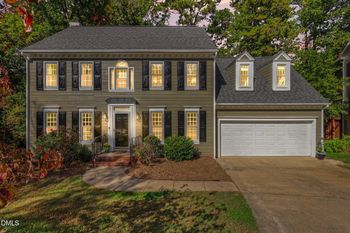



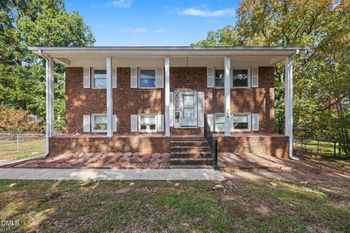
Two homes. The same budget. Both in desirable locations southwest of Raleigh. How do you decide between Cary and Apex?
Imagine a household comparing a house near High House Road in Cary with another near Salem Street in Apex. Both have the bedrooms they need and enough space to work from home. One person commutes to Research Triangle Park several days a week, and weekends usually include a park visit, errands, and somewhere to get lunch.
The listing photos make both homes appealing. But those photos won't tell the household which commute works better, what each property costs to maintain, or whether the places they plan to visit are actually convenient.
That's the challenge with comparing Cary vs. Apex. These neighboring Triangle towns offer many of the same broad advantages: access to Raleigh-area jobs, established residential neighborhoods, newer development, parks, and shopping. Yet they have different downtown settings, and daily life can vary considerably within each town.
The better choice depends less on the town name than on the home, its location, and the routines you want to build around it.
Suppose your job is in Research Triangle Park, commonly called RTP. You might assume Cary has the better commute because of its position in the Triangle. But a house in western Cary and one in eastern Cary can produce very different routes.
Apex presents the same challenge. A property near downtown Salem Street isn't interchangeable with one farther from the center of town.
The Triangle's major roads help explain why. U.S. 1, U.S. 64, N.C. 55, Interstate 40, and N.C. 540 all influence regional travel. Which road is useful depends on the house, the destination, and the access points between them.
Even your destination needs to be specific. Research Triangle Park is a large employment area, not a single office building. Raleigh-Durham International Airport (RDU) is somewhere else entirely. Someone commuting to an RTP workplace entrance has a different trip to evaluate than someone frequently traveling to RDU or downtown Raleigh.
Return to those two hypothetical homes. The household should enter each address into a navigation app using the actual workplace entrance, then compare the morning departure and afternoon return at the times they expect to travel.
Next, add the stop that rarely appears in a home-search discussion: daycare pickup, an appointment, groceries, or an activity on the way home.
That additional stop can change which location feels more convenient.
The Triangle Expressway makes parts of the regional road network more accessible, but it also introduces a cost that belongs in your housing decision.
The expressway includes tolled portions of N.C. 540 and N.C. 885. The North Carolina Department of Transportation uses all-electronic tolling, so there are no conventional tollbooths where drivers stop to pay.
Drivers with NC Quick Pass accounts and drivers billed by toll invoice use different payment arrangements and rates. Not every section of highway marked N.C. 540 is tolled.
If a preferred route uses the expressway, check its actual entry and exit points using the NC Quick Pass toll calculator.
Then consider the number of round trips you'll make in a normal month. A toll that seems minor during one afternoon drive may matter when repeated throughout the workweek.
The same principle applies to fuel and vehicle use. A property's ownership cost doesn't end at the driveway.
Both Cary and Apex have public transit options, although service varies by route and destination.
Cary has GoCary bus service and passenger rail service. Apex has GoApex Route 1 and regional connections. GoCary Route 9 connects downtown Apex with downtown Cary.
As of August 2026, GoTriangle Route 305 also serves Apex on a connection involving Holly Springs and Raleigh, while Route 311 connects the Holly Springs/Apex corridor with RTP on weekdays.
The Town of Apex's regional transit information explains the routes and links to their operating schedules.
Cary's passenger rail station adds another travel option, but intercity rail shouldn't be mistaken for a substitute for every daily work commute.
If transit matters to your decision, verify the nearest stop, transfers, service frequency, evening and weekend availability, and the return journey. A bus route running through town doesn't establish that it serves the home you're considering.
Once you've identified workable locations, the next question is what kind of home fits your needs.
You may hear Cary described as the established suburban option and Apex as the newer-development alternative. There's some appeal to that shorthand, but it isn't reliable enough to guide a purchase.
Both towns have older residential areas, newer communities, detached houses, and attached-home options. A Cary home could have a relatively small lot and recent construction. An Apex home could be established, with mature landscaping and repairs to consider.
Even within Cary, the search changes as you move around town.
Downtown and Academy Street offer one setting. High House Road near Fred G. Bond Metro Park provides another point of reference. West Cary around Green Level Church Road and North Cary near Harrison Avenue should also be explored separately.
These aren't formal neighborhood boundaries or guarantees about nearby homes. They're starting points for understanding how different locations within Cary affect your search.
In Apex, the distinction between living near downtown Salem Street and living farther away is just as important.
A useful comparison begins with the same housing requirements: bedrooms, usable living space, parking, stairs, lot size, storage, and acceptable maintenance.
Imagine one home has a larger yard while another offers a smaller outdoor space and less routine landscaping. If you want a garden, the larger lot may be worth the work. If you travel frequently, having less yard to maintain might be a benefit.
Now add the ownership responsibilities.
An established detached house may leave the owner responsible for most exterior maintenance. An attached home might have a homeowners association (HOA) that handles some of those tasks—or one that maintains only shared areas.
The HOA fee alone doesn't tell you which arrangement is better.
Review the governing documents, financial obligations, and any special assessments—extra charges beyond regular association dues. Confirm what is maintained, what insurance the owner must carry, and whether restrictions affect your plans for the property.
Our Raleigh-area guide to HOA fees and rules explains these responsibilities in more detail.
A home with a lower association fee isn't necessarily cheaper to maintain. Likewise, a higher fee deserves an explanation of exactly what you're paying for.
When comparing properties, bring together the mortgage terms, property-specific taxes, homeowners insurance, association charges, utilities, anticipated repairs, and transportation expenses. That's a more useful measure of affordability than the asking price alone.
There is a measurable difference in the towns' adopted municipal property tax rates, but it needs context.
For the fiscal year July 1, 2026, through June 30, 2027, Cary adopted a municipal property tax rate of $0.3675 per $100 of assessed value. Apex adopted a rate of $0.3735 per $100 of valuation.
Consider this hypothetical calculation using the same assessed value in each town.
| Municipal property tax | Cary | Apex |
|---|---|---|
| Hypothetical assessed value | $500,000 | $500,000 |
| Town tax rate per $100 | $0.3675 | $0.3735 |
| Annual town tax | $1,837.50 | $1,867.50 |
Under those assumptions, the Apex municipal tax would be $30 more per year.
That is a comparison of the municipal portions only, not the complete property tax bills for two actual houses.
County taxes, applicable district taxes, other charges, and any eligible tax relief must be evaluated separately. The same purchase price also doesn't guarantee the same assessed value. Rates and assessments can change in future years.
The figures come from Cary's adopted FY2027 budget information and Apex's FY2026–27 budget.
The practical lesson isn't that one town will always be cheaper. It's that the municipal rate difference may be modest compared with other property-specific expenses.
If one home needs substantial updates, carries higher insurance costs, or adds recurring tolls to your commute, those costs could matter far more than the difference illustrated here.
A buyer can compare two houses, prefer one, and then discover something unexpected: the mailing address doesn't tell the whole story about the property.
Cary's municipal boundaries extend into Wake, Chatham, and Durham counties. Apex is primarily in Wake County, but a small portion of the town was annexed into Chatham County in April 2022.
That matters because the postal address, municipal limits, county jurisdiction, school attendance area, and utility service boundaries are different systems.
Two homes marketed under the same town name may not have identical public services, school assignments, or tax obligations.
The Town of Cary's Property Research Map helps buyers examine boundaries, zoning, floodplains, utility information, and existing or proposed greenways.
It also distinguishes town limits from areas outside those limits where Cary exercises certain planning authority, known as extraterritorial jurisdiction.
Cary advises independently confirming critical property information. A map layer showing a proposed trail or development feature is not proof that the improvement is completed or accessible.
For a serious home candidate, establish the county, municipality, relevant taxing jurisdictions, and service providers from official property information. Don't infer them from the ZIP code.
School assignment can be one of the biggest differences between two otherwise similar properties.
For homes served by the Wake County Public School System (WCPSS), use the official address lookup for the specific property, grade level, and school year.
Check the assigned schools, school calendar, and transportation eligibility.
The calendar is worth examining rather than assuming it will fit your household's schedule. Transportation arrangements can also affect who handles the morning and afternoon trips.
Another important detail is enrollment capacity.
WCPSS has schools with enrollment caps. A student whose base school is capped may be subject to overflow placement and waitlist procedures. School assignments can also be reviewed and changed over time.
The district explains these issues in its enrollment guidance and capped-school information.
For a property served by Chatham County Schools, use that district's school assignment locator and confirm the applicable enrollment procedures.
If a property is served by Durham Public Schools, consult its enrollment guidance and linked School Locator to check the address, or contact the Office of Student Assignment at 919-560-2059. Confirm which school district serves the property first; neither the town name nor the county alone establishes a particular school assignment.
Neither a Cary nor an Apex address guarantees attendance at a particular school. A listing's school information, a subdivision name, or the location of the nearest campus isn't enough to establish eligibility.
Rather than treating the school question as a contest between the towns, verify the arrangements that would apply to your household at each address.
Utilities can be another surprise.
The Town of Apex provides electric, water, sewer, garbage, recycling, and other listed services to most locations within its municipal limits. But there are exceptions, including locations that don't receive electricity from the town.
Apex also supplies electricity to some addresses in Cary.
That means a Cary mailing address doesn't establish one universal electric provider, and an Apex address doesn't guarantee every municipal utility service.
The town explains these distinctions on its residential utility connection page.
Before making a final cost comparison, confirm which providers actually serve each property, whether municipal water and sewer are available, and what recurring charges apply.
It's a small research task compared with a home inspection, but it helps prevent avoidable surprises in your ownership budget.
Once the practical questions are addressed, there's another part of the decision: where you want to spend your time.
A visit to each downtown offers a revealing contrast.
Downtown Cary Park, at 327 South Academy Street, gives the downtown area a substantial public gathering space.
The seven-acre park includes landscaped areas, places to gather, play spaces, and facilities supporting events and recreation. Its surrounding streets connect visitors to other downtown destinations.
For a household that likes the idea of meeting friends at a park, attending community activities, or combining outdoor time with a meal nearby, it offers a distinctive setting.
You can explore the park's amenities and parking options before visiting.
But here's where a home search needs a closer look.
If you love Downtown Cary Park, how often would you actually go? Would the home you're considering allow you to walk there comfortably, or would a visit usually involve driving and parking?
Someone living near Academy Street may experience downtown differently from someone living in West Cary.
Both can enjoy the park. The everyday convenience may not be the same.
Downtown Apex has a different physical character.
Salem Street forms the center of a traditional downtown setting with historic commercial buildings, local businesses, and cultural destinations such as the Halle Cultural Arts Center.
Instead of a large central park defining the experience, the streets and buildings help create the appeal.
Someone who enjoys a historic main-street environment may find the setting particularly attractive. Another buyer may prefer Cary's park-centered downtown.
These are preferences, not rankings.
The Town of Apex provides background on its historic properties and small-town character.
And, as in Cary, a downtown that feels inviting during a visit doesn't mean every home in town is within walking distance. Check the route from the actual house, including sidewalks, crossings, and access to the errands you expect to complete.
A home near Salem Street and another farther from downtown can offer very different daily routines.
One temporary condition matters for anyone exploring downtown Apex now.
As of October 30, 2026, the Town of Apex's Salem Streetscape project page continued to display an October 6 construction update.
Work was underway, with one-way traffic restrictions affecting part of Salem Street and temporary changes to downtown transit access. Businesses remained open.
The town anticipated substantial completion in mid-December 2026 and final cleanup and remaining work in mid-January 2027. Those were projected dates, not completed milestones.
The official Salem Streetscape page provides current access and detour information.
Check it before visiting. Construction can affect the experience you have on a particular day, but temporary traffic arrangements shouldn't define your long-term impression of the town.
Parks are one of the more enjoyable parts of comparing these towns because both offer real choices.
But the most important park may not be the largest or the best known. It may be the one you can reach easily on a Tuesday evening.
Fred G. Bond Metro Park, at 801 High House Road, is an established recreation destination with Bond Lake, trails, play areas, athletic fields, and other park facilities.
For someone considering a home near High House Road, Bond Park is an obvious place to visit.
Downtown Cary Park provides a different kind of outdoor experience, with its downtown location and public gathering spaces.
Cary also maintains a greenway network that includes Black Creek Greenway, White Oak Creek Greenway, and a Cary-managed section of the American Tobacco Trail.
These can be valuable to people who enjoy walking, running, or cycling regularly.
Explore the Town of Cary's greenway information to identify the routes that interest you.
Then check the actual connection from the house.
A trail might be nearby on a map without having a convenient entrance. The route could involve crossing a busy road, and a proposed connection shown in planning information may not yet be open.
A park you can easily include in your regular walks or errands may become part of your routine. One that requires a separate trip may get less use over time.
Apex Community Park provides a useful contrast.
The park has a lake, nature and fitness trails, athletic fields, and courts. Its main entrance is at 2200 Laura Duncan Road, while the lake-trail entrance is at 1808 Lake Pine Drive.
That second address is particularly useful for someone whose main interest is walking around the lake.
A family intending to use the courts or athletic facilities may find another entrance more practical. Check the official Apex Community Park page for facilities, rules, and maintenance updates.
Pleasant Park, at 3400 Pleasant Plains Road, offers another type of outing. Its Enchanted Forest play area, courts, fields, and Splashlantis splash pad create options for different ages and interests.
The splash pad operates seasonally rather than year-round, and some facilities listed in park plans may still be future improvements.
Review Pleasant Park's current amenities and schedules before assuming a particular activity is available.
If your household regularly attends sports practices, spends weekends at playgrounds, or prefers a lake trail for exercise, these facilities provide concrete destinations to evaluate.
That brings the comparison back to geography.
A home in Cary may suit your preferred park routine better than another Cary home. The same applies within Apex. What matters is the route to the park entrance you'll use, the hours you need, and whether the facility supports the activity you enjoy.
By this point, you may prefer one town's downtown or a particular recreation facility. That's useful information, but it doesn't settle the housing decision.
Return to the two hypothetical homes near High House Road and Salem Street.
The household should compare them using the same priorities, rather than emphasizing the advantages of one and overlooking the disadvantages of the other.
| Household priority | What to check for both addresses |
|---|---|
| Work and transportation | Actual workplace routes, departure times, return trips, tolls, and transit feasibility |
| Home and ownership budget | Floor plan, condition, taxes, insurance, HOA responsibilities, utilities, maintenance, and transportation costs |
| Schools and services | Official school assignments, calendar, enrollment conditions, jurisdiction, and utility providers |
| Downtown and errands | Practical route to shopping, restaurants, healthcare, and frequently visited destinations |
| Parks and recreation | Preferred park entrances, trail connections, crossings, schedules, and available facilities |
| Long-term fit | Yard upkeep, stairs, storage, parking, property restrictions, and space for changing needs |
The comparison works best when the same household is evaluating both homes.
If school transportation is essential, examine it for both addresses. If someone needs to reach RTP four days a week, evaluate that trip from both locations. If a garden is a priority, compare the usable yard and property restrictions—not simply the lot dimensions.
After narrowing the choices, visit each location during an ordinary weekday and again on a weekend.
Walk the streets around the home. Drive the commute when you'd normally make it. Look at the grocery route, park access, and the places you'd expect to visit repeatedly.
A neighborhood that seems quiet and convenient during an open house may feel different during school pickup or the evening commute.
And remember that the strongest alternative to a particular Cary home may be another Cary home—not necessarily one in Apex. The same is true in reverse.
Cary and Apex both deserve consideration if your home search includes the western and southwestern Raleigh area.
Cary offers locations with access to Downtown Cary Park, Bond Park, greenways, established neighborhoods, and different connections to regional destinations.
Apex offers its historic Salem Street downtown, major recreation facilities such as Apex Community Park and Pleasant Park, and housing choices spread across different parts of town.
Those are useful distinctions. They aren't guarantees about any particular property.
For one household, the deciding factor may be the commute to RTP. For another, it may be an address-specific school assignment, maintenance responsibility, or a park that fits the family's routine.
The best approach is to identify a few homes in each town that meet your requirements and let the evidence from those addresses guide the decision.
For a closer look at each community, explore our moving to Cary guide and guide to living in Apex.
You can also browse Cary homes for sale and Apex homes for sale, then investigate the location and ownership obligations of individual properties.
If you're comparing specific addresses and want help evaluating the tradeoffs, contact Raleigh Realty.
The right choice isn't whichever town wins a general comparison. It's the home that gives your household the better combination of location, everyday convenience, financial comfort, and room to live the way you want.
Conceptual watercolor illustrating the Cary vs. Apex home search, with a leafy park path on one side and a small-town brick streetscape on the other. The artwork represents lifestyle contrasts rather than actual locations in either town.
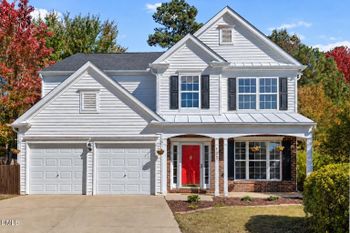
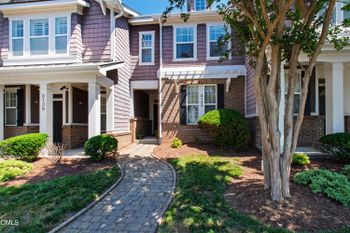
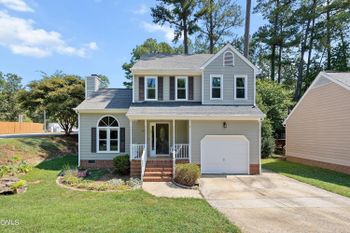
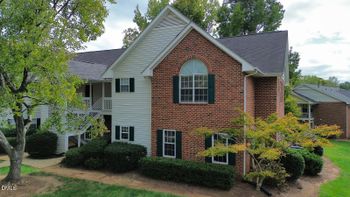
Explore homes in Cary and Apex through the separate residential multiple listing service (MLS) searches below. Each displays up to three listings marked Active or Coming Soon, without a price filter. These are starting points for your home search, not matched comparable properties or confirmation of municipal boundaries or school assignments. Verify listing status, property details, and address-specific information as you narrow your choices.