New - 21 Hours Ago



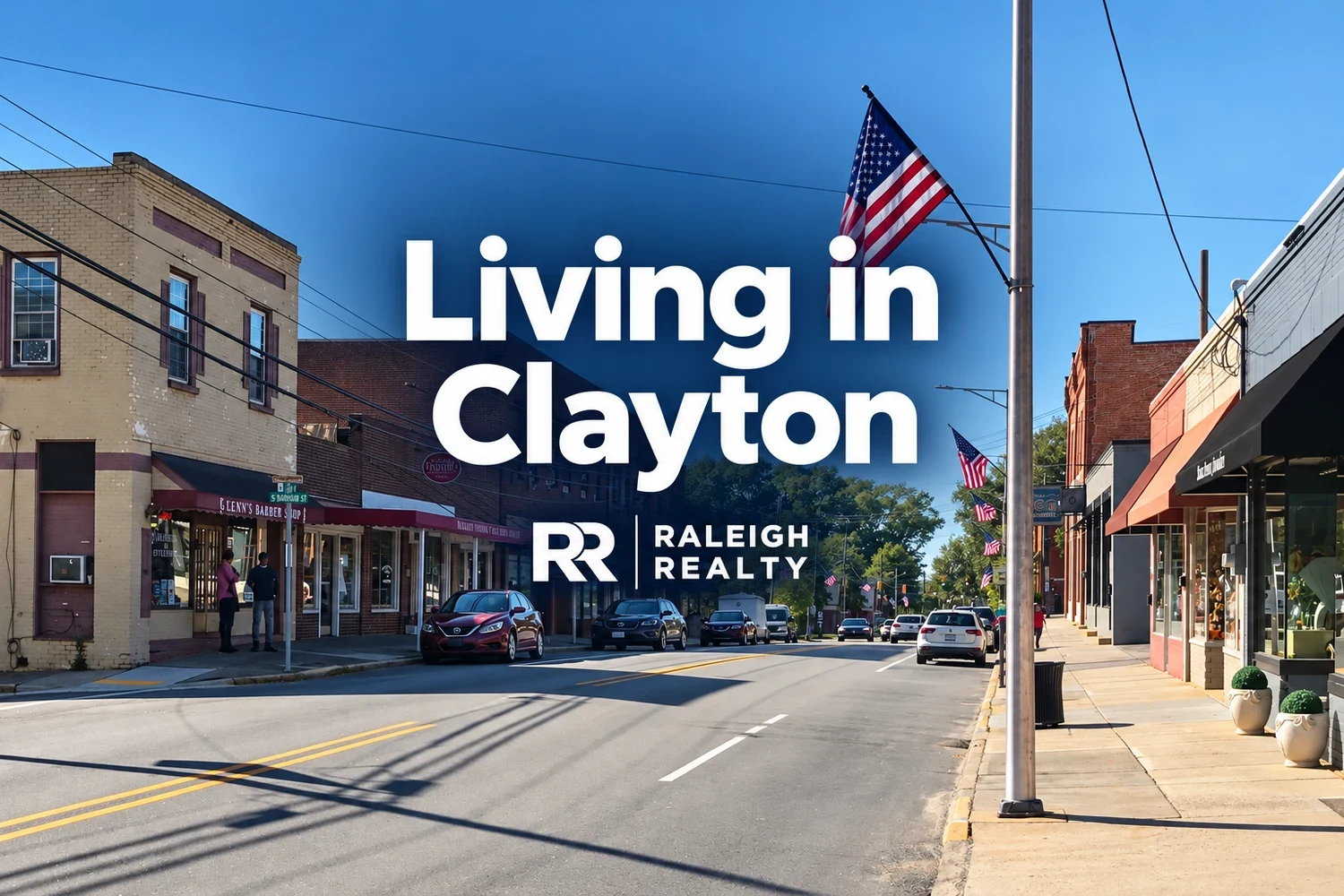
Clayton, North Carolina, sits southeast of Raleigh in Johnston County. It offers something many Raleigh-area homebuyers are looking for: a downtown with locally owned shops, restaurants, and community events, paved greenways, and access to jobs and activities across the Triangle—the broader Raleigh-area region.
On a Saturday, you might browse the downtown farmers market, walk beside the Neuse River, or take the kids to Municipal Park. Monday can tell a different story. Depending on where you live, getting to work might involve a toll road, your utility provider might differ from a neighbor's across town, and your property taxes could depend on whether your home sits inside municipal limits.
That's what makes Clayton worth looking at closely. The town offers appealing everyday amenities, but how often you'll use them—and what it costs to live here—depends on the home you choose.
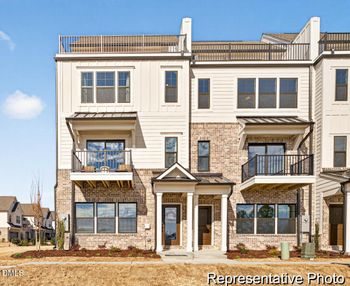
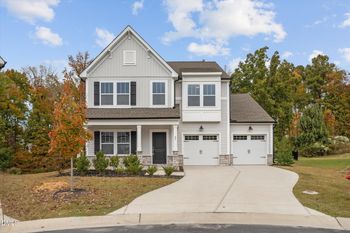
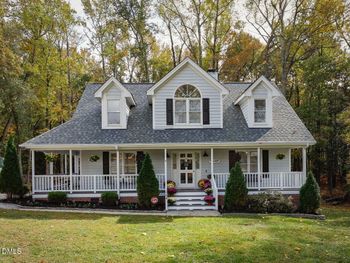
If you're exploring homes for sale in Clayton, NC, here's what to know about the lifestyle, transportation, housing expenses, and property details that can shape your decision.
One of Clayton's attractions is having a downtown where residents can shop, eat, and attend local events without making a trip into Raleigh.
According to the Town of Clayton's downtown guide, the area features locally owned shops and restaurants, live jazz, performing arts, a Saturday farmers market, street festivals, a public-art sculpture trail, and a community garden.
That mix gives residents more than a place to run errands. You might make the farmers market part of your Saturday routine, attend a performance, or meet friends for dinner downtown.
For someone moving from a subdivision without a distinct town center, having these activities nearby could be a meaningful change.
But there's a difference between living in a town with an active downtown and living within comfortable walking distance of it.
A property advertised as "near downtown Clayton" might be convenient by car but less practical on foot. Sidewalks, intersections, pedestrian crossings, and the actual route between the front door and Main Street determine whether walking downtown is realistic.
When touring a home, check the route rather than relying on the map distance alone. Would you feel comfortable making that walk on an ordinary evening? Can you reach the restaurants and shops you expect to visit, or would you normally drive?
If downtown access is a major reason you're considering Clayton, that distinction deserves attention before you choose a neighborhood.
Clayton's outdoor amenities give residents several ways to spend time outside, from longer rides along the river to shorter outings at a playground.
Two connected paved trails are particularly useful to know about.
Sam's Branch Greenway is a 1.25-mile pedestrian and biking trail, with a trailhead at 1358 N. O'Neil Street. It connects with the Clayton River Walk on the Neuse, a four-mile paved trail beside the Neuse River.
The River Walk also has trailhead and parking access at 2686 Covered Bridge Road. Together, these trails connect into a longer regional trail network.
The town's greenways and trails guide provides more detail about the routes.
For someone who enjoys cycling or regular walks, the network offers opportunities to exercise and spend time outdoors without relying entirely on neighborhood streets.
Proximity, though, isn't the same as access. A home might appear close to a trail on a map but lack a straightforward route to an entrance. Another property could be farther away in a straight line yet offer an easier connection.
If you expect to use the greenways several times a week, find the nearest practical entrance and check how you'd get there.
Not every outdoor trip needs to involve several miles of walking or biking.
Clayton Municipal Park, at 325 McCullers Drive, includes a playground, basketball and futsal facilities, picnic shelters, an open lawn, a stage, and an approximately 0.23-mile walking loop.
That makes the park an option for a playground visit, a picnic, or a short walk. According to the town, the playground's general hours are dawn to dusk.
The park also has a splash pad, although it's a seasonal amenity. As of October 2026, the town says the splash pad is closed for the year and scheduled to return in 2027.
A cyclist might care most about easy access to the connected greenways, while a family with young children might place greater value on nearby playgrounds and open space. Those preferences can lead buyers toward different locations, even when they're looking in the same general area.
Clayton's local amenities may be enough to fill a weekend, but many residents also need to travel throughout the Raleigh area for work, appointments, and other activities.
Driving to downtown Raleigh is different from driving to Cary. A trip to Research Triangle Park (RTP), the region's major business and research park, has its own route considerations. Raleigh-Durham International Airport (RDU) is another distinct destination.
Even two people leaving from Clayton can have different experiences because of their home locations, departure times, return schedules, and stops along the way.
For example, someone commuting across the Triangle every weekday may prioritize highway access. A person who travels to the same destination only occasionally may find that a less convenient route is an acceptable tradeoff for other features of the home.
Neither person can rely on a single town-wide commute estimate to make the decision.
Complete 540 is the project to finish the regional outer highway loop around the Raleigh area. Its purpose is to extend the existing Triangle Expressway and complete the remaining connection around the region.
According to the North Carolina Department of Transportation (NCDOT), Phase 1 opened on September 25, 2024. It extended the Triangle Expressway from N.C. 55 to I-40/U.S. 70, identified as future I-42 in the project's description.
Phase 2 is under construction and will extend from I-40 toward Knightdale, completing the outer loop. NCDOT schedules that phase for completion in 2028.
For someone choosing a home in Clayton, the open section provides another route worth evaluating. Whether it actually improves a commute depends on where the home is, where the driver is going, and when the trip takes place. Its availability doesn't guarantee a faster journey.
Buyers should also distinguish between the portion that's already open and the remaining project. The 2028 completion date is a target, not a guarantee that every planned connection will be available by then.
There's a financial consideration, too: the Triangle Expressway is a toll road.
A toll route may be useful for a particular trip, but recurring charges can add up when it's part of a regular commute.
Use the NC Quick Pass toll calculator to estimate costs for the route and payment method you'd actually use.
Then consider those tolls alongside travel time, frequency, fuel, and parking. An occasional airport trip and a five-day-a-week commute can have very different implications for your monthly budget.
Buyers investigating transportation projects around Clayton may also encounter inconsistent road names.
NCDOT's N.C. 42 Widening in Clayton project page explains that older project maps predate road renaming in early 2025.
Within the project's limits, the road is now called Veterans Parkway, and part of it is designated N.C. 36.
The proposed widening runs between N.C. 50 and U.S. 70 Business (Clayton Boulevard).
Knowing both the older and newer names can make it easier to compare transportation plans with current road maps. The proposed widening should also be distinguished from improvements that have already been completed.
Clayton's location can look different depending on which destinations matter to you. In the "Life in Clayton, NC?" discussion, commenters described different experiences with trips to downtown Raleigh and Cary, weekends in Raleigh, local activities, and utility providers. Those are separate considerations when you're weighing homes: where you'll go regularly and which services reach the address.
In a separate Clayton-to-RTP commuting discussion, people considering a home purchase weighed work locations, trip frequency, and recurring toll expenses. These are individual accounts, not representative or current travel-time and cost estimates. For each home you're comparing, check the routes at your normal departure and return times, including regular stops, rather than relying on historical figures from the discussions.
Location and housing expenses are closely connected, so it's worth checking property taxes while comparing homes rather than treating them as a calculation to make after choosing a neighborhood.
Clayton and Johnston County have separate property-tax components.
For fiscal year 2026–27, Johnston County's adopted property-tax rate is $0.51 per $100 of assessed valuation. The Town of Clayton's separate rate is $0.49 per $100. The town's Taxes & Fees page still shows the earlier county rate of $0.52 and a combined $1.01. This example uses the county's adopted 2026–27 rate instead, making the two components $1.00 per $100 for a property subject to both.
Clayton's FY27 budget was adopted on June 15, 2026, became effective July 1, 2026, and did not include a town property-tax increase.
Sources: Johnston County adopted budget, Town of Clayton Taxes & Fees, and Clayton Budget Engagement.
If both the county and town rates apply, the calculation looks like this:
| Property-tax component | Annual amount |
|---|---|
| Johnston County, $0.51 per $100 | $2,040 |
| Town of Clayton, $0.49 per $100 | $1,960 |
| Combined annual total | $4,000 |
| Monthly equivalent | Approximately $333.33 |
The calculation also uses assessed valuation, not purchase price. A home purchased for $400,000 won't necessarily have an assessed value of $400,000.
And a Clayton mailing address doesn't by itself establish that the town's tax rate applies. A property must be within the relevant taxing jurisdiction for that component to be charged.
Johnston County handles property assessment, valuation, billing, and collection. Its parcel records can help establish the assessed value and applicable taxing jurisdictions for a particular home.
A home's purchase price is only one part of the financial decision.
The monthly budget may also need to account for homeowners insurance, homeowners association (HOA) dues, possible association assessments, utility expenses, loan terms, and mortgage insurance if required.
For example, two homes with similar prices could have different ongoing costs because one has association dues or additional assessments while the other doesn't.
If you're considering a community with an HOA, review its rules and financial obligations. Our guide to Raleigh-area HOA fees and rules explains what buyers should examine.
Closing expenses are another part of the purchase, separate from ongoing monthly bills. You can learn more in our Raleigh-area closing-cost guide.
When comparing mortgage estimates, pay attention to what's already included. If the lender's payment includes taxes and homeowners insurance through escrow, adding those expenses again would overstate the total.
A useful comparison accounts for the same categories of cost across every property you're considering.
Property taxes aren't the only expense that can vary between homes.
The Town of Clayton's utility information says most residents and businesses within town limits use municipal water, sewer, and electric services. Its electric department serves a majority of town customers.
Other Clayton-area properties may have different providers or service arrangements. Town and county utility systems have different rates.
Before estimating monthly costs, identify which companies or departments provide electricity, water, and sewer to the property and confirm the existing connections.
The town published an FY27 monthly utility-bill illustration, effective July 1, 2026, based on 900 kilowatt-hours (kWh) of electricity and 4,000 gallons each of water and sewer usage.
Under those customer, service, and usage assumptions, the charges are:
| Utility or service | Illustrated monthly charge |
|---|---|
| Electricity, 900 kWh | $148.45 |
| Water, 4,000 gallons | $56.64 |
| Sewer, 4,000 gallons | $102.56 |
| Solid waste | $26.00 |
| Total | $333.65 |
Source: Town of Clayton FY27 Budget Engagement.
Clayton's utility-rates explanation distinguishes fixed monthly base charges for supplied services from charges that vary with consumption.
This means a higher utility bill isn't necessarily evidence of a higher rate. It could reflect greater usage, fixed charges, or a different billing period.
When available, historical bills for the property can help you make a more informed comparison. Look at both the charges and the usage figures, and consider how your household's habits might differ from those of the previous occupants.
For homes served by municipal utilities, Clayton also provides a residential service application and contact information for starting service.
For households with school-age children, the applicable school assignment may influence which homes are worth considering.
Johnston County Public Schools (JCPS) publishes approved 2026–27 student-assignment maps and provides a School Finder tool.
School Finder uses the home's physical address and Johnston County's digital geographic mapping records to help identify the relevant school assignment.
That's more precise than relying on a listing's town name or a general neighborhood description.
The district also cautions that School Finder information is subject to modification, which is important during boundary changes.
For the 2026–27 school year, changes are largely associated with Wilson's Mills High School and students entering ninth and tenth grades that year. The district describes a phased addition of grade levels, with the school moving toward serving grades 9–12 in 2028.
For a family with a child approaching high school, the timing matters. An assignment for the current school year may not answer every question about future years.
Use the JCPS student-assignment maps and School Finder to check the assignment for the home's physical address, the child's grade, and the relevant school year. Then confirm the applicable assignment and enrollment information with the district.
And remember that an assignment map isn't a measure of school quality. It identifies attendance areas, not how well a school will suit a particular student.
Clayton's proximity to the Neuse River is part of its recreational appeal. The River Walk provides access to a natural setting and a longer paved trail network.
But the appeal of the river as a place to spend time outdoors and the flood exposure of a particular home are separate considerations.
A house shouldn't automatically be considered flood-prone because it's in Clayton or near a greenway. Nor should a different location within town be treated as proof that flooding isn't a concern.
North Carolina Emergency Management identifies the state's Flood Risk Information System (FRIS) as a resource for examining flood maps and property risk.
Start with ReadyNC's flood information and use the FRIS mapping system to investigate the home you're considering.
After checking the map, look for available property information about past flooding or water intrusion. That might include relevant property disclosures or other records describing previous problems, if such information is available.
You can also ask an insurance provider or agent about flood-insurance availability, coverage, and estimated costs for the specific address. A property's location, coverage needs, and other details may affect the result.
A flood map is a useful starting point for understanding potential exposure, but it doesn't establish every aspect of a property's risk or tell you what an insurer will charge.
Clayton can be an appealing choice for buyers who value an active local downtown, community events, parks, and access to paved trails while remaining connected to the greater Raleigh area.
Different households, though, may find different parts of the Clayton area more practical.
Someone working remotely most days who enjoys weekend cycling and downtown outings might place considerable value on greenway and Main Street access. A household that regularly travels to RTP might prioritize the work route and recurring toll expenses. For a family with a child entering high school during the district's boundary transition, school assignment could be a deciding factor.
If you're comparing Clayton-area neighborhoods, our guide to the best neighborhoods in Clayton, NC can help you explore the options. If you're still deciding whether Clayton is the right community, our comparison of Raleigh-area suburbs provides a broader starting point.
Choose two or three promising properties from the Clayton home listings and picture an ordinary weekday and weekend from each.
For each home, consider where you'd go regularly, which routes you'd take, and what expenses or inconveniences might come with those choices. One property may offer easier access to the activities you enjoy, while another could simplify a trip you make several times a week.
You can also use our moving to the Raleigh area checklist to organize the practical steps involved in relocating.
If you'd like help weighing specific homes and neighborhood tradeoffs, contact the HomesRaleigh team with the properties and destinations you're considering. Comparing those actual locations, rather than relying on general impressions of Clayton, can give you a clearer basis for choosing where to live.
Source information reviewed October 16, 2026. Tax rates, utility charges, school assignments, transportation project schedules, and property conditions can change. Confirm current information for the property you're considering before making a purchase decision.
Cover: AI-assisted illustration of East Main Street in Clayton, based on Indy beetle's 2023 photograph (CC0).