New - 3 Hours Ago





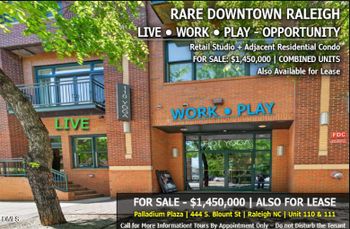
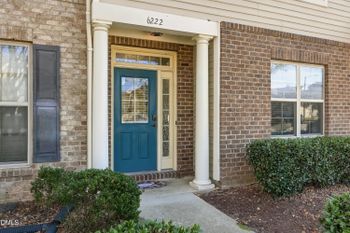
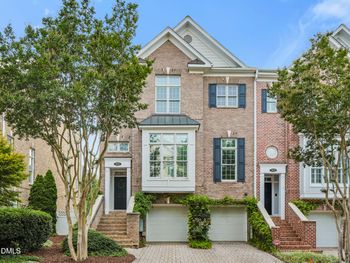
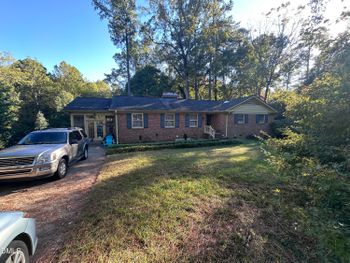
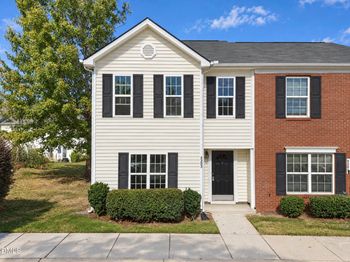
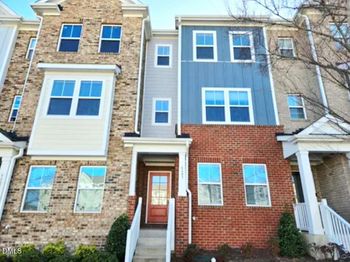
An older house with a small yard. A townhouse with newer finishes. A condominium with a lower asking price and a monthly association fee.
All three might appear in a Raleigh home search that fits your budget. But which one would actually cost less to own?
The answer can change once you look beyond the asking price.
An older detached house might have no homeowners association (HOA) payment but need a new roof sooner than expected. A townhouse could come with monthly dues that cover some maintenance but leave other repairs to the owner. A condominium might offer a manageable mortgage payment while carrying shared expenses and potential special assessments.
These differences matter when you have limited room in your monthly budget.
Finding affordable homes in Raleigh is partly about knowing which properties to consider. It's also about understanding what you'll pay after moving in, what you're responsible for maintaining, and whether a lower purchase price comes with conditions that affect your future choices.
A lender might approve a purchase price that looks comfortable on paper. That doesn't necessarily mean every home at that price will fit your monthly budget equally well.
Consider two hypothetical properties.
The first has a principal-and-interest payment that's $150 per month lower than the second. At first glance, it appears to be the more affordable choice.
Now suppose its HOA payment is $300 per month higher.
Once you include both the loan's principal and interest and the association charge, the first property would cost $150 more per month on those items alone.
That example isn't based on current Raleigh listings or mortgage quotes. It simply illustrates how quickly the comparison can change.
It also doesn't prove that the first property costs more overall. Its association dues might cover expenses the second homeowner would otherwise pay directly.
That's why an accurate comparison needs to account for both the bills you receive and the responsibilities you retain.
Begin with mortgage principal and interest, then add property taxes, homeowners or condominium-unit insurance, mortgage insurance if required, and separate flood insurance where applicable.
Include HOA or condominium dues, ground-lease charges if applicable, utilities, and an allowance for maintenance.
Check which expenses are already included. Taxes and insurance may be collected through your mortgage escrow account. Some association dues cover services such as landscaping, common-area maintenance, insurance, or certain utilities. Those costs shouldn't be counted twice.
The Consumer Financial Protection Bureau explains that condo and homeowners-association dues usually aren't included in payments to a mortgage servicer, although some servicers may agree to escrow them.
That means the mortgage payment shown on a statement may not represent everything you owe each month.
Keep anticipated maintenance separate from known obligations, too. Setting aside money for future repairs is different from facing a documented roof replacement or an approved association assessment. A known expense needs to be included according to when it must actually be paid.
Then consider the cash required to purchase the property. Your down payment, closing costs, prepaid expenses, inspections, and immediate repairs are separate needs. So is the money you'll want available after closing.
A purchase that consumes nearly all your available savings can become difficult even when the monthly mortgage payment seems manageable.
Once you've established that larger budget, the different Raleigh housing options become easier to compare.
A smaller detached house can be attractive if you want a private yard, some separation from neighbors, or control over how you maintain the property.
An older resale home may also offer a location or layout that better suits your needs than a newer development.
But the asking price doesn't tell you how much work the house needs.
Imagine walking through a home with new flooring, updated countertops, and fresh paint. The interior looks ready for move-in. Yet the roof, drainage, electrical system, plumbing, or heating and cooling equipment may still need attention.
Cosmetic improvements don't establish the condition of those systems.
Before deciding that the home is an inexpensive option, examine the inspection findings and obtain specialist estimates where material concerns are identified. Separate repairs that need prompt attention from improvements that can reasonably wait.
A dated bathroom may be an acceptable compromise. A failing heating and cooling system has different implications for a limited cash reserve.
The lot matters as well. A larger yard brings outdoor space but may require more time, equipment, landscaping, and drainage upkeep. And while many detached homes place major exterior responsibilities directly on the owner, some still have association obligations.
An older house won't necessarily cost more to maintain than a newer one, and a smaller home doesn't guarantee smaller repair bills. Compare the house's condition, the upkeep its lot requires, and which expenses the owner must cover.
The question is whether the property leaves enough room in your budget to handle those responsibilities.
For buyers who don't need a substantial yard, Raleigh condos and townhomes offer another set of possibilities.
Attached homes can have smaller outdoor spaces and different maintenance arrangements. Some may be newer than detached homes available within the same purchase budget.
But there's a distinction that's easy to miss during an online search: a townhouse describes a type of building, while a condominium describes a form of ownership.
Under the City of Raleigh's housing-type definitions, townhouses are attached homes separated vertically by party walls. The homes may occupy individual lots, or the entire building may occupy a single lot.
That describes the type of building, not the expenses or ownership obligations attached to a particular home.
A condominium is different. North Carolina law defines it through individually owned units and shared ownership of common elements.
A property that looks like a townhouse can legally be a condominium. An attached home on its own lot can have a different ownership structure.
Why does that matter?
Suppose you're considering a two-story attached home. Its listing says the association handles exterior maintenance. Before assuming the roof is covered, you need to establish what the association actually maintains and insures.
The deed, governing declarations, and association documents determine those obligations. A transaction attorney can help clarify exactly what the buyer owns.
The website's property-type label isn't enough.
Association dues aren't necessarily an extra cost with no corresponding benefit.
They may fund shared landscaping, insurance, infrastructure, repairs, or services that an individual homeowner would otherwise arrange and pay for.
Still, an association doesn't make a home maintenance-free.
Owners fund those expenses through regular dues and, when necessary, additional assessments. A reserve fund sets aside money for future shared obligations. A special assessment is an additional charge for a particular expense, rather than part of the ordinary recurring dues.
That creates two practical questions: What does the association cover today, and how is it preparing to pay for major expenses tomorrow?
Request the current dues, budget, available reserve information, insurance details, maintenance responsibilities, and any planned or approved assessments. Compare those obligations with the expenses you'd carry at a detached home.
For condominium resales covered by North Carolina G.S. 47C-4-109, the unit owner must give the prospective buyer a statement of monthly common-expense assessments and other unit-owner fees before ownership transfers. Sales requiring a public offering statement and certain exempt sales under G.S. 47C-4-101(b) are exceptions.
That statutory requirement doesn't guarantee a complete reserve study, every financial record before your contract's investigation deadline, or approval for your mortgage.
Ask for important information early, and have your lender review any applicable condominium-project, insurance, or financial requirements for your particular loan program.
For more detail about one upcoming financing issue, see our guide to Raleigh condo reserves and the January 2027 financing changes. Those changes concern specific Fannie Mae policies and dates, not every mortgage or association.
A condominium with higher dues may still be a reasonable choice if the covered services replace significant direct expenses. The important thing is knowing which costs remain yours.
The home itself is only part of the affordability calculation.
Two similarly priced properties may have different taxes, utility charges, transportation expenses, and service arrangements.
Start with property taxes.
A home's asking price is not its assessed value for taxation. Nor does a seller's current tax bill necessarily establish what you'll owe after buying.
Before comparing properties, obtain the actual parcel record and applicable tax jurisdiction. Our Raleigh and Wake County property-tax guide explains how to investigate those costs.
Then check utilities rather than assuming nearby properties have identical bills or providers.
For example, Raleigh's stormwater utility fee depends on impervious surfaces, including rooftops and driveways.
Under the city's residential tiers approved in July 2026, a property with 1,001 to 3,870 square feet of impervious area carries an $8.47 monthly stormwater fee.
Multi-family properties use a different calculation. A shared charge could also be reflected in association expenses, depending on the property's arrangements.
The City of Raleigh's stormwater fee information explains the calculations. The actual property account should determine what you include in your budget.
Eight dollars and forty-seven cents probably won't settle a homebuying decision. But taxes, insurance, utilities, dues, and maintenance can produce a meaningful difference when considered together.
If the available Raleigh homes don't fit your needs, you may start looking toward Garner, Knightdale, Wendell, Cary, or other Wake County locations.
Widening your search can introduce different houses, communities, and ownership arrangements. It doesn't automatically reduce your total expenses.
Raleigh, Cary, Garner, Knightdale, and Wendell are separate municipalities. A Raleigh mailing address doesn't necessarily establish that a property is within Raleigh city limits, subject to the same tax jurisdiction, or served by the same utility providers.
This matters for both ongoing costs and homebuyer-assistance eligibility.
Daily travel deserves attention as well.
A house with a manageable purchase price may require more driving to work, school, childcare, or other frequent destinations. Depending on your household, that could mean additional vehicle expenses, parking, or time on the road.
Compare actual routes at the times you expect to travel. Don't assume that moving farther away saves money or that living closer automatically eliminates transportation expenses.
For a household already managing a tight budget, the broader cost of living in Raleigh belongs in the same discussion.
There is another reason a home may become attainable even when its asking price doesn't change: assistance with the money required at closing.
The City of Raleigh's Homebuyer Assistance Program offers deferred, zero-interest loans that can help eligible first-time buyers with down payments, closing costs, or financing gaps.
As of October 29, 2026, the city advertises two options:
Both programs target first-time buyers whose household income is no more than 80% of area median income. The applicable limit depends on household size.
Buyers must meet program requirements, including homebuyer education and use of an approved participating lender. The lender submits the application on the buyer's behalf.
The assistance may reduce the initial cash barrier, but it isn't unrestricted free money.
These are deferred loans with repayment conditions, including sale of the property or ceasing to use it as a primary residence.
The Enhanced program also carries a ten-year deed restriction that limits an owner's sale proceeds if the home is sold during that period.
That's particularly important for someone who may relocate or purchase another home within several years.
The city identifies eligible new and existing single-family detached houses, townhomes, and condominiums as potential property types. Actual qualification still depends on the buyer, the address, the financing, and the program's rules.
For the Enhanced program, check the property's address against the current map of eligible areas. For the traditional program, ask an approved lender to confirm the current maximum purchase price, because the city's published materials give conflicting figures.
Also confirm available funds, timing, permitted combinations with other assistance, and all repayment terms.
Meeting the income requirements doesn't guarantee assistance, a mortgage, or an eligible home.
The benefit becomes clearer when you consider what the program changes—and what it doesn't. Assistance may help you complete the purchase, but the regular mortgage payment, property taxes, insurance, repairs, dues, and any applicable resale limitations remain important.
Our first-time homebuyer programs guide examines assistance and financing choices in greater detail.
For some buyers, however, the opportunity involves more than help with closing costs. It involves buying a home under a different ownership model.
Near downtown Raleigh, the Raleigh Area Land Trust offers an example of how a restricted-ownership program can create another route into homeownership.
Its model differs from a conventional purchase.
Through RALT's shared-equity homeownership program, a qualifying buyer purchases the home while the land trust retains ownership of the underlying land.
The buyer leases the land beneath the home through a 99-year ground lease that is renewable and inheritable.
That is not the same as fee-simple ownership of both the house and the land.
The model is designed to preserve affordability for future income-qualified purchasers. Resale-price limits also restrict how much the current owner can receive when selling.
That tradeoff deserves careful consideration.
A buyer primarily interested in securing a stable home may place a different value on those terms than someone expecting unrestricted resale proceeds to help finance a future move.
Those terms affect everyday decisions as well as a future sale. RALT says owners must notify the land trust before selling and cannot list their homes on the open market. RALT helps find an income-eligible buyer from its waitlist and may purchase the home itself if no eligible buyer is available, but a buyback isn't guaranteed. Major modifications may also require prior approval. Review the ground lease, financing requirements, recurring charges, and maintenance responsibilities alongside these rules. RALT explains additional owner considerations here.
RALT's Cottages of Idlewild project provides a concrete example.
As viewed on October 29, 2026, the organization's project page advertises 14 planned for-sale cottages and four rental cottages, with a starting sales price of $190,000. It also states that applications are open.
For a buyer who has struggled to find a conventional home within budget, that figure is understandably interesting.
But it needs context.
The advertised $190,000 is a starting price for the project, not a promise that a particular cottage is ready to buy for that amount. A summer update anticipated finishing ten homes by the end of October 2026, but that target doesn't establish how many were complete or available on October 29. The four planned rental cottages are a separate housing option, not homes offered for purchase.
Before making plans around one of the 14 planned for-sale cottages, ask RALT which homes are actually being offered, what each costs, when a buyer could move in, and how the financing and ground lease would work.
RALT's eligibility guidelines generally define a first-time buyer as someone who hasn't owned a principal residence in the previous 36 months. They include an exception for a single parent who owned a home with a former spouse during that period but no longer lives there. Household income must generally be at or below 80% of area median income.
The organization also considers whether a household has sufficient income to carry the housing expenses, along with credit and financing qualifications, asset limitations, counseling, and buyer contributions.
RALT requires buyers to contribute at least 1% of the purchase price from their own funds toward the down payment and/or closing costs. That contribution counts toward those expenses; it isn't automatically an extra 1% added on top of them.
RALT estimates $5,000–$8,000 in total closing costs, which is program guidance rather than a quote for a particular purchase. Eligible gifts, down-payment assistance, grants, loans, or other permitted sources may help cover the remaining costs, depending on actual availability and acceptance under the lender's and applicable programs' rules.
Neither eligibility nor an open application process guarantees financing, funding, or an available home.
The Cottages of Idlewild therefore illustrates a possible path to lower-cost ownership, not evidence that every home around Idlewild or downtown Raleigh is inexpensive.
And that distinction applies to other local affordable-housing projects.
East College Park offers another useful Raleigh example, this time through a completed redevelopment rather than a currently advertised project.
East College Park is east of downtown Raleigh, near Saint Augustine's University. The City of Raleigh's area-outline map shows the area in relation to Hill Street, Oakwood Avenue, Raleigh Boulevard, and New Bern Avenue.
Between 2016 and 2023, the city supported a detached-home redevelopment that included both income-restricted and unrestricted purchases.
According to the city's East College Park redevelopment information, the program involved primary-residence requirements and ten-year deed restrictions.
That redevelopment history doesn't tell you what a home in East College Park costs today. If you're considering a resale, check its current asking price, condition, and any recorded restrictions still in effect. The original program's pricing, affordability requirements, and deed terms don't automatically apply to neighboring properties.
The area can include older market-rate houses, renovated resales, restricted-ownership homes, and newer construction with very different expenses. Calling the whole neighborhood inexpensive would obscure those differences.
Once you've found two or three homes within your purchase budget, bring the comparison back to your actual household expenses.
For each property, work through the same questions.
What cash will you need to close? Include the down payment, closing costs, prepaid items, inspections, known immediate work, and the savings you'll retain afterward. If assistance is involved, confirm its availability, financing compatibility, and obligations.
What will you pay every month? Use property-specific financing estimates, taxes, insurance, applicable mortgage insurance, association or lease charges, utilities, and maintenance provision. Check for expenses already included in escrow or association dues.
What could require a significant payment soon? An aging roof, major mechanical concern, approved special assessment, or documented shared-property obligation may change the comparison. Request estimates and records rather than assuming a general maintenance allowance will cover everything.
What will you own and control? Establish the legal ownership structure, maintenance allocation, and any ground-lease, association, or resale restrictions. Ask the transaction attorney and responsible organizations to confirm the actual terms.
How does the address affect daily life? Compare tax jurisdiction, utility service, transportation requirements, and the trips you make most often.
Those answers may change which home makes sense. A monthly association fee could cover work you'd otherwise pay for yourself, while a lower asking price might come with repairs your savings can't comfortably absorb. If you're using assistance or purchasing through a land trust, financing and future-sale conditions belong in that comparison, too.
You can start exploring homes for sale through HomesRaleigh, adjusting your search by location, price range, and home type. This is an unfiltered search starting point, not a guarantee that homes within a particular budget are currently available.
If you're weighing Raleigh locations or housing types, Raleigh Realty can help you explore the local options. Your lender, insurer, association, program administrator, public authorities, and closing attorney should confirm the financing, coverage, fees, program requirements, public charges, and legal terms within their respective roles.
The goal is a home that suits your space and location needs, with ownership rights and ongoing costs you can live with. A purchase should leave room for ordinary bills, necessary repairs, and the changes life brings—not just the expenses of closing day.
Conceptual illustration comparing Raleigh home options, featuring model brick ranch and two-story houses, a notebook, calculator and keys. The scene represents homeownership cost comparisons, not an actual listing or identified Raleigh neighborhood.