New - 30 Mins Ago
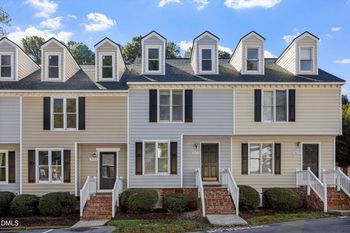




A Raleigh condo buyer could qualify for a mortgage, agree on a price and still have the financing run into trouble because of something the buyer doesn't control.
The condominium association's budget.
Starting January 4, 2027, Fannie Mae is raising its standard requirement for the money condo associations set aside for major repairs and replacements. Under its Full Review process, the minimum annual reserve allocation will increase from 10% to 15% of budgeted assessment income.
For buyers planning a 2027 purchase, the association's financial records could matter much earlier than expected. Owners preparing to sell or refinance have reason to check them, too. The policy was announced in March; its January effective date is approaching.
The March 18, 2026 Fannie Mae lender letter raises the standard Full Review replacement-reserve allocation to 15% for loans with application dates on or after January 4, 2027.
That percentage applies to annual budgeted assessment income. It isn't 15% of a condo's purchase price, a required existing bank balance or an automatic increase in monthly HOA dues.
Consider a hypothetical Raleigh condominium association with $300,000 in annual budgeted assessment income.
Under the current 10% standard, it would allocate $30,000 to replacement reserves.
At 15%, the allocation becomes $45,000.
That's a $15,000 difference in the association's annual budget, assuming the assessment-income figure stays the same. It doesn't automatically mean owners must contribute an additional $15,000.
An association might already be setting aside that much. Another might need to adjust spending, redirect money within its budget or increase assessments.
And the calculation isn't necessarily based on every dollar the association receives. Fannie Mae's Full Review requirements permit exclusions for certain incidental income, income designated for reserves, special-assessment income and charges for utilities ordinarily paid by individual owners, such as cable or Internet service.
The lender applies those rules to the association's actual budget.
For buyers comparing condos in Raleigh or Cary, this exposes a weakness in judging an association by its monthly fee alone.
One property may have relatively low dues but limited annual funding for future repairs. Another could charge more while maintaining a stronger plan for replacing roofs, repairing shared structures and handling major common-area expenses.
Money already in a reserve account and the contribution planned for the coming year are different measures. A healthy balance alone doesn't satisfy the annual allocation test.
Unlike a typical detached-home purchase, a condo mortgage may require a review of the association's reserves, insurance and significant project conditions—not just the buyer and individual unit.
Fannie Mae doesn't make the mortgage directly. It purchases eligible loans from lenders, which must determine whether the borrower, loan and condominium project satisfy the applicable requirements.
If a project fails those standards, a loan secured by one of its units may not be eligible for sale to Fannie Mae until the problem is resolved.
That doesn't necessarily make the condo impossible to finance. Another loan program could have different requirements. But an alternative can't be assumed just because the buyer's personal finances are strong.
January 4 is the loan-application threshold, not a closing-date deadline. A January closing doesn't automatically trigger the new rule, and a December offer doesn't exempt a loan application submitted on or after January 4, 2027. The lender must apply the requirements governing the actual application and project review.
Switching between Fannie Mae and Freddie Mac isn't an automatic escape, either.
Freddie Mac announced a corresponding change on March 18, increasing its standard reserve allocation from 10% to 15% for mortgages with application-received dates on or after January 4, 2027. Freddie Mac also requires compliance with the applicable new standards even when an earlier project review hasn't expired.
An association below the standard allocation may instead qualify using an acceptable reserve study. It examines major shared components, their condition, remaining useful lives, expected replacement costs and how the association plans to fund the work. The lender must evaluate that plan, not merely accept the existence of a report.
Under Fannie Mae's Full Review rules, the study or update must have been completed within three years of the lender's project approval. It must be prepared by an independent third party with appropriate expertise and include the required assessment of common-area components, costs, reserves and funding needs.
The project's funded reserves must meet or exceed the study's recommendations, and its budget must include the highest recommended reserve allocation.
Since August 3, 2026, Fannie Mae has also prohibited relying on the baseline funding method for this alternative. That method could allow projected reserve balances to remain just above zero.
The alternative doesn't impose a fixed cash-reserve balance on every association. Instead, the lender checks what the project has saved and plans to contribute against that study's specific funding recommendations.
Fannie Mae retired Limited Review for new applications beginning August 3, 2026; Freddie Mac separately retired Streamlined Review under its updated requirements. Some transactions that previously used abbreviated review now face different requirements, although Fannie Mae still permits a qualifying Waiver of Project Review.
Those include eligible detached condominium units, projects with two to four units, and certain five-to-ten-unit projects that aren't part of a larger development or master association.
Some owners may also qualify for a waiver through a Fannie Mae-to-Fannie Mae limited cash-out refinance, which generally pays off the existing mortgage and permitted costs with only limited cash back. The maximum 80% loan-to-value ratio means the new first-mortgage amount cannot exceed 80% of the property's current appraised value; other eligibility conditions still apply.
A waiver doesn't erase every project requirement. Applicable insurance, project-status restrictions and other eligibility conditions still matter.
In the Triangle, two attached homes may look nearly identical while having different legal ownership arrangements: one a condominium, the other a fee-simple townhouse in a planned community. Their ownership responsibilities and mortgage-review requirements can differ.
The North Carolina Real Estate Commission's Condos & Townhouses brochure explains why checking the legal ownership form and association obligations matters. A listing description alone won't settle which condo rules apply.
An advertised HOA fee may be easy to find. The financial records a North Carolina condo buyer needs can take longer to obtain.
North Carolina General Statute 47C-4-109 generally requires a condominium resale seller to provide a statement of monthly common-expense assessments and other fees before conveyance, subject to the public-offering-statement and exempt-sale exceptions. Applicability can also depend on the condominium's governing legal regime.
That fee statement isn't a complete financial review and doesn't guarantee a reserve study, recent board minutes, detailed financial statements or lender project approval before the contract's due-diligence deadline.
A Raleigh condo might have manageable HOA dues but board minutes discussing a major repair and possible special assessment. The distinction between a charge under discussion and one formally approved matters to the buyer's future expenses. Depending on the circumstances, the lender may also need details about repairs, association finances and project eligibility.
Even when a special assessment is approved, collecting it doesn't automatically replace the ordinary reserve allocation required under Fannie Mae's standard calculation. Who must pay depends on the governing documents, the assessment decision, the purchase contract and transaction-specific legal guidance.
Fannie Mae's Condo Buyers Guide encourages investigating association finances, reserves, repairs, insurance and assessments before finalizing an offer. For a specific Triangle condo, that can mean requesting current and proposed budgets, financial statements, an available reserve study, assessment notices, relevant board minutes, material repair reports and insurance information while there's still time for the lender to evaluate them.
HomesRaleigh's HOA Fees and Rules in Raleigh explains the broader process of evaluating dues, special assessments and association records.
An owner preparing to list a Raleigh condo in early 2027 has a reason to ask about reserve funding, master insurance and necessary building repairs before a buyer's lender does. Unresolved project issues can complicate a sale even when the unit itself is well maintained.
That doesn't make the condo unsellable or predict a decline in value. The national policy doesn't identify which Triangle associations will need budget changes, and falling below the standard allocation alone doesn't establish that a project is ineligible.
Refinancing owners face a different decision: some transactions may qualify for a review waiver, while others require the lender to assess the project under the rules applicable to the new loan.
Fannie Mae offers a Condo Status Finder for condominium associations, management companies and authorized advisers.
A "No findings" result means the project isn't currently flagged as ineligible, not that Fannie Mae has reviewed or approved it. Nor does the absence of an existing approval automatically disqualify a loan; the lender can conduct the applicable review and determine eligibility.
Buyers and owners can contact Raleigh Realty with a specific condominium address and the association documents they have or need. Raleigh Realty can help investigate the property, request records or discuss the home search; the lender determines which project review applies and whether the loan and condominium project meet the applicable requirements.
A buyer who discovers missing information early can ask what the lender still needs before proceeding further. A seller or refinancing owner can pursue those records before someone else's deadline puts the transaction in doubt.
Conceptual editorial watercolor of condominium buildings and a generic budget document with a calculator. Not an actual Triangle property, association financial record or lender-approval notice.