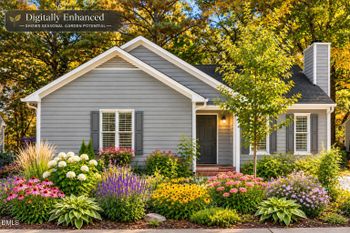
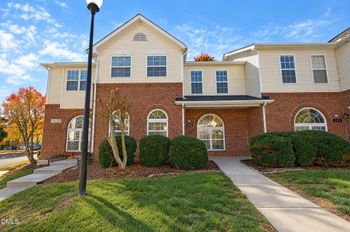
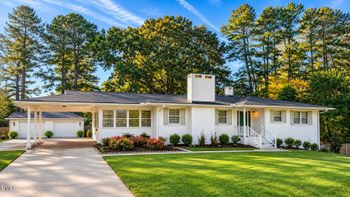
New - 30 Mins Ago

$500,000
Active
5
Beds
4
Baths
2837
Sqft
0.13
Acres
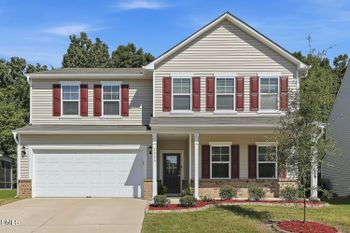
7552 Poplar Meadow Ln, Raleigh, NC 27616
MLS#: 10202855




The median first-time home buyer in America is still 40 years old. And the latest numbers suggest that getting into a first home hasn't become much easier.
In its November 5, 2026, report, the National Association of Realtors found that first-time buyers accounted for just 22% of recent primary-residence purchases, up slightly from 21% a year earlier. Their median age tied last year's record high.
For someone trying to buy a first home near Raleigh, that national finding leads to a more practical question.
What can you actually buy without spending every dollar you've saved?
Consider three numbers from October's local home sales.
The median Raleigh townhome sold for $321,990. In Durham, it was $330,000. In Cary, it was $465,000.
Same broad housing type. Very different starting points.
And the difference doesn't end with the sale price. Under one illustrative mortgage scenario, moving from a $350,000 home to a $450,000 home adds about $610 a month in principal and interest, before taxes, insurance or association dues.
The national report documents when first-time buyers purchased and how their financing and cash resources differed. Recent Triangle sales reveal something buyers can act on: which home types and locations deserve a closer look, and what those choices mean for the money needed at closing and afterward.
NAR's November 5 report covers people who completed primary-residence purchases across the United States between July 2025 and June 2026.
The survey received 7,125 responses from primary-residence buyers, with a 3.1% adjusted response rate.
These are households that bought a home, not everyone who wanted to buy but couldn't.
The overall median first-time buyer age was 40. Break the results down by how those buyers paid, though, and a different picture emerges.
Among first-time buyers who financed their purchase, the median age was 38. Among those who paid entirely in cash, it was 54.
Ten percent of first-time buyers paid all cash.
Money accumulated before the purchase also played a role. NAR reported that the median first-time buyer put 9% down, while 25% used gifts or loans from family or friends as a down-payment source. Another 10% used inheritance.
Those percentages describe national buyers. They don't establish how Raleigh-area buyers financed their homes or how old they were when they purchased.
But the findings put the savings problem in perspective.
A first-time buyer may be ready for a mortgage payment long before accumulating enough cash for the down payment, closing expenses and a financial cushion afterward.
A starter home isn't an official MLS property category. It might be a condo, a townhome or a smaller single-family home, depending on the buyer's budget and needs.
The October 2026 closed-sale numbers from Doorify MLS show how much that choice can change the search.
October 2026 median sold prices. Closed listing-record counts appear in parentheses.
| City | Condo | Townhome | Single-family home |
|---|---|---|---|
| Raleigh | $268,000 (28) | $321,990 (101) | $539,100 (354) |
| Durham | Not reported; small sample | $330,000 (57) | $460,000 (212) |
| Cary | $350,000 (17) | $465,000 (27) | $675,000 (97) |
Imagine a buyer with a $350,000 purchase-price ceiling.
In Raleigh and Durham, that puts the search near the October median for townhomes. In Cary, it reaches the condo median but falls well below what the median townhome sold for.
Someone determined to buy a single-family home faces a different set of choices.
Durham's $460,000 single-family home median was lower than Raleigh's $539,100 and Cary's $675,000, but all three exceeded that hypothetical $350,000 ceiling.
None of this means a smaller single-family home can't be found below the median. Half the qualifying sales fall at or below the middle of the distribution, and the mix of properties can shift from month to month.
These figures also aren't a record of starter-home purchases. They cover closed MLS listing records across all prices and bedroom counts, using MLS city labels that don't necessarily match municipal boundaries exactly. The records don't identify first-time buyers.
Smaller samples deserve care, particularly Cary's 17 condo sales and Durham's condo category, where too few records were available for a reported median.
Still, the October results show why changing the property type can make a bigger difference than simply looking for a smaller version of the same house.
A buyer who searches only single-family homes in Raleigh may overlook townhomes or condos that have recently sold much closer to the budget.
Someone drawn to Cary may find that a condo is a more realistic starting point than a townhome at the same purchase-price ceiling.
But these are completed sales, not today's available inventory. The next step is checking actual homes by type, price and bedroom count through HomesRaleigh's budget-fit home search.
And a lower purchase price doesn't necessarily mean a lower monthly ownership cost.
Consider two hypothetical purchases: one at $350,000 and another at $450,000.
Both buyers put 10% down and take out a 30-year fixed-rate mortgage.
Using the 7.18% average 30-year fixed rate from Freddie Mac's November 5, 2026 survey, the principal-and-interest payments would look like this:
| $350,000 home | $450,000 home | |
|---|---|---|
| Down payment (10%) | $35,000 | $45,000 |
| Mortgage amount | $315,000 | $405,000 |
| Monthly principal and interest | ~$2,134 | ~$2,744 |
The $100,000 difference in purchase price creates approximately $610 more in monthly principal and interest, plus another $10,000 upfront for the down payment.
Those figures are illustrations, not lender quotes. Freddie Mac's survey rate doesn't guarantee that a particular first-time buyer will qualify for 7.18%.
And the calculation leaves out several major costs: property taxes, homeowners insurance, mortgage insurance and HOA or condo dues.
That's particularly important when comparing a condo or townhome with a single-family home.
A $300,000 condo may have a smaller mortgage than a $350,000 townhome, but its association dues could narrow the monthly-payment difference.
An association may cover certain exterior repairs or common-area expenses while leaving the owner responsible for other maintenance. Buyers also need to examine restrictions and the possibility of special assessments for major work.
A single-family home may shift more maintenance responsibility directly to the homeowner.
The right comparison isn't simply which property has the lowest price.
It's what the household will pay every month, what costs might arise outside that payment and which responsibilities come with the property.
The Consumer Financial Protection Bureau's Loan Estimate guidance explains how to compare mortgage payment projections and closing costs. When evaluating actual homes, buyers also need to account for property-specific expenses, including association dues that may be paid separately.
Return to the hypothetical $350,000 home.
With 10% down, the buyer needs $35,000 for the down payment.
But that isn't the full amount to budget for the purchase.
The CFPB's homebuying guidance gives a typical closing-cost planning range of 2% to 5% of the purchase price, separate from the down payment.
For the two illustrative homes, that produces these rough planning figures:
| $350,000 home | $450,000 home | |
|---|---|---|
| 10% down payment | $35,000 | $45,000 |
| Closing costs (2%–5%) | $7,000–$17,500 | $9,000–$22,500 |
| Combined planning amount | $42,000–$52,500 | $54,000–$67,500 |
Closing expenses may include lender fees, settlement charges, prepaid insurance and initial escrow funding.
The actual cash due at closing depends on the transaction. Deposits already paid, lender or seller credits, adjustments and other settlement costs can change the final amount.
Buyers may also face inspection, appraisal or other expenses before closing. And moving into a home without cash left for repairs or emergencies creates another financial risk.
This is where a buyer who can handle the monthly mortgage payment may still find the purchase difficult.
No.
NAR's 9% figure is the median down payment made by first-time buyers in its national survey. It isn't a mortgage-program minimum.
Some qualified buyers may use conventional financing with as little as 3% down, while eligible borrowers may qualify for FHA financing with 3.5% down.
On a $350,000 home, a 3% down payment would be $10,500, compared with $35,000 at 10%.
That's $24,500 less needed for the down payment.
The trade-off is a larger loan balance and potentially different mortgage-insurance costs. Closing expenses don't disappear just because the down payment is smaller.
For some North Carolina buyers, assistance may help with the initial cash requirement.
The North Carolina Housing Finance Agency's NC 1st Home Advantage Down Payment program offers $15,000 to eligible buyers using a qualifying mortgage.
The assistance comes as a zero-interest, deferred second mortgage, with forgiveness during years 11 through 15 under the program's terms.
It's not unrestricted grant money. Eligibility and repayment conditions matter.
HomesRaleigh's First-Time Homebuyer Programs Guide explains assistance options and their requirements in greater detail.
Before narrowing the search to one city or home type, establish two numbers.
How much cash can you comfortably commit to the purchase? That includes the down payment, closing expenses and money you'll need to keep in reserve.
What all-in monthly housing payment works for your household? The answer needs to include taxes, insurance, mortgage insurance where applicable, association expenses and a plan for maintenance.
Those limits may point to different decisions.
A buyer with enough cash to close but a tight monthly budget may need a lower purchase price or smaller recurring expenses. Someone who can afford the monthly mortgage payment but hasn't saved enough for closing may need to compare lower-down-payment financing or qualifying assistance.
Once those limits are clear, compare actual listings within the budget and request Loan Estimates based on financing terms you could realistically use.
A first home has to work on closing day. It also has to work on an ordinary Tuesday six months after moving in.
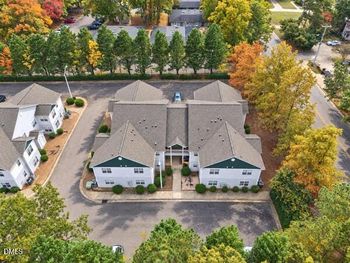
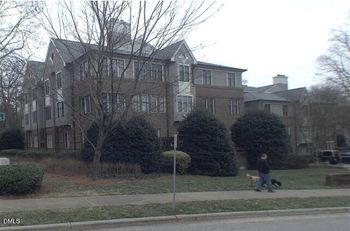
Conceptual illustration of Triangle townhomes.