New - 1 Day Ago

$295,000
Active
3
Beds
3
Baths
1743.01
Sqft
0.03
Acres
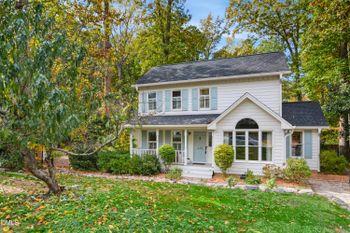
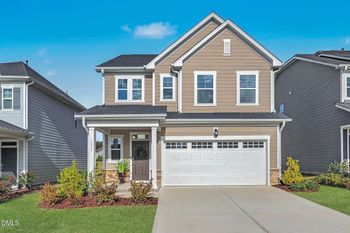
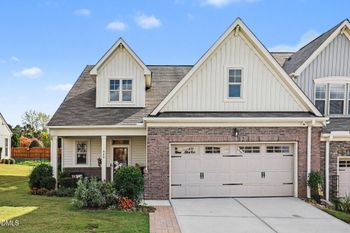
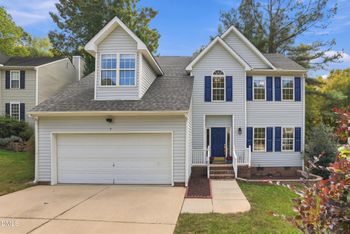
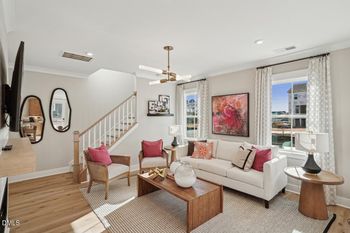
1238 Legacy Greene Ave, Wake Forest, NC 27587
MLS#: 10202305



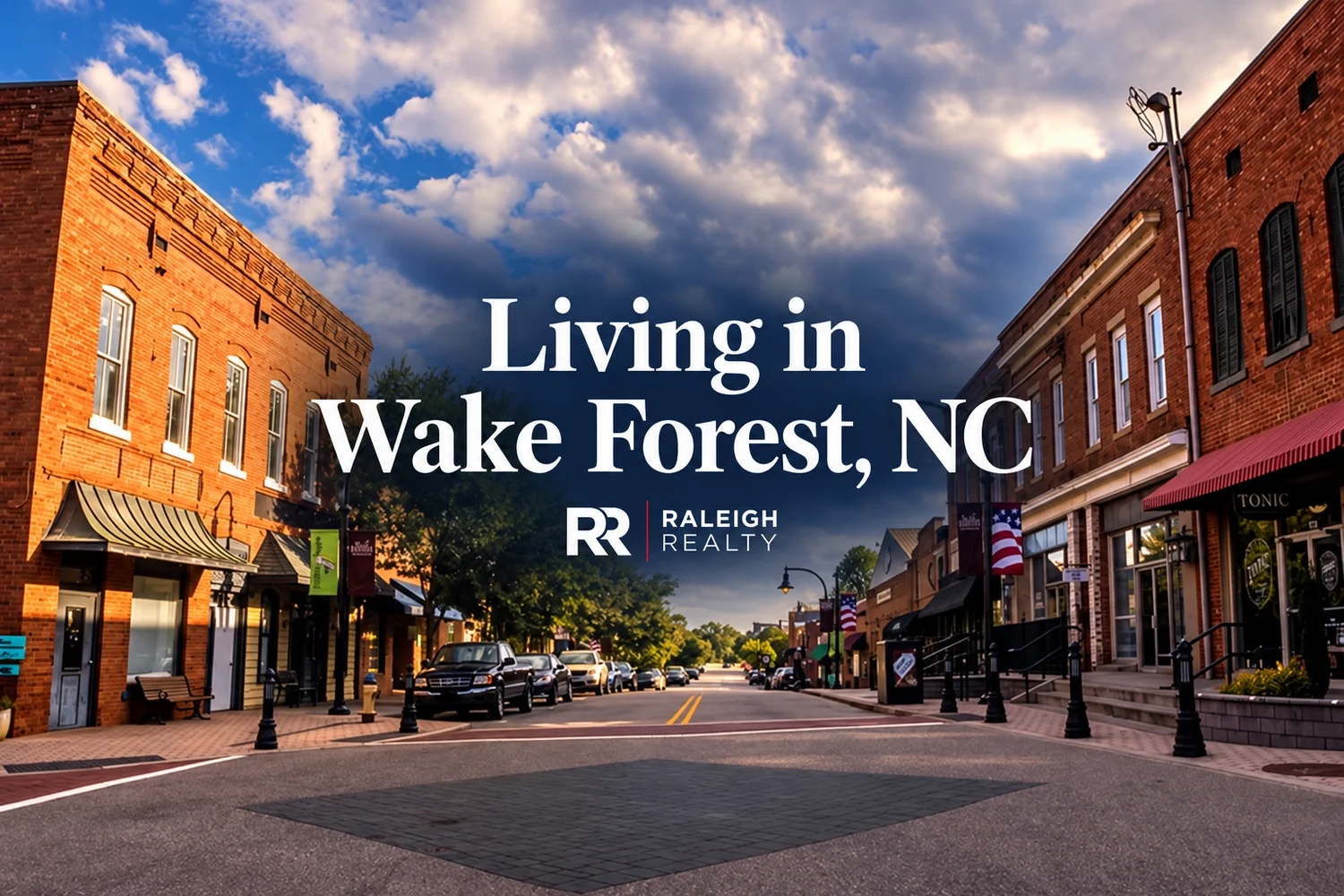
Downtown Wake Forest has the kind of Saturday morning that makes a good first impression. The farmers market sets up behind Town Hall, restaurants and shops open along South White Street, and the surrounding blocks retain much of the town's historic character.
But a few miles away, Wake Forest looks different. Heritage has extensive residential development and greenway connections. Holding Village combines newer homes, townhomes and apartments around a lake. Other parts of the Wake Forest mailing area extend beyond town limits and even across the county line.
Living in Wake Forest, North Carolina, offers a mix of historic streets, suburban neighborhoods, parks and access to Raleigh. The tradeoffs are driving, ongoing development and the way costs and services change from one address to another.
That variety is part of the appeal, but it also makes choosing a location important. A house near downtown may offer a different daily routine from one near Rogers Road or the NC 98 corridor, even when their asking prices are similar.
Wake Forest has grown considerably. The U.S. Census Bureau estimated 58,147 residents in July 2025, an increase of 21.1% from its revised April 2020 population base. The combination of an established town center and substantial suburban growth helps explain both the amenities and the pressures residents encounter today.
Wake Forest has a genuine downtown, although living in Wake Forest and living within walking distance of downtown are two different things.
South White Street is the commercial center, with older brick storefronts occupied by restaurants, shops and businesses. Nearby, South Brooks Street connects Town Hall with the Wake Forest Renaissance Centre, which hosts performances, exhibitions and community events.
The Wake Forest Farmers Market operates Saturday mornings throughout the year along South Taylor Street behind Town Hall.
From April through September, the town also hosts Friday Night on White, a monthly outdoor concert series that closes part of South White Street to traffic. These events give downtown an identity beyond its restaurants and storefronts.
For someone living nearby, the ability to walk to a restaurant or event may become part of an ordinary week. But the same activity can mean busier streets, changed parking arrangements and occasional road closures.
Outside the historic center, much of Wake Forest functions more like a collection of suburban neighborhoods connected by major roads. Shopping centers, grocery stores, offices and residential developments are distributed across different corridors.
Whether walking is practical depends on the home and where you need to go. A house might have sidewalks and attractive streets but still require driving to pick up groceries. Another might be convenient to daily errands without being particularly close to downtown.
It is worth walking the actual route from a prospective home to the destinations you expect to use. Sidewalk continuity, crossings and traffic often tell you more than a simple distance measurement.
Wake Forest's housing differences go beyond architectural style. They influence maintenance, outdoor space, access to recreation and how much time you spend getting around.
The older downtown neighborhoods, Heritage and newer Holding Village show how those differences play out.
Around North Main Street and South Avenue, Wake Forest's older housing reflects its origins as a college town. North Main was once called Faculty Avenue because professors from the original Wake Forest College lived along it.
Some homes in this part of town date to the nineteenth and early twentieth centuries. The nearby Glen Royall Mill Village Historic District tells another part of the story. Developed beginning around 1900, the village retains much of its original mill-era housing and street layout.
These locations provide alternatives to the more standardized layouts found in many newer developments.
An older house might have distinctive architectural details, mature landscaping or convenient access to downtown. But the house itself may require more investigation. A renovated kitchen does not establish the condition of the roof, foundation, wiring, plumbing or other major systems.
Historic designation also deserves attention before making renovation plans.
Wake Forest has three districts listed on the National Register of Historic Places and one locally designated historic district. The local district is concentrated along North Main Street and portions of South Avenue.
Exterior work within the local district requires a Certificate of Appropriateness. Minor work can be approved administratively by town staff; major alterations require Historic Preservation Commission review. National Register designation by itself does not impose those same local restrictions.
If you want to replace windows, add onto a house or change a porch, confirm the property's designation and the applicable review process before treating those plans as routine improvements.
Heritage represents a different stage of Wake Forest's growth. Development began around 2000 and expanded into a large master-planned area with multiple residential sections.
The town-owned Smith Creek Soccer Center, at 690 Heritage Lake Road, has three soccer fields, a playground, a picnic shelter and access to paved trails. The Smith Creek Greenway connects through the surrounding area and into a broader trail network, including connections toward Rolesville.
That can change how residents use their surroundings. Instead of driving to a park for every walk or bicycle ride, some locations provide convenient connections to established public trails.
However, Heritage covers a substantial area. Homes differ in their proximity to greenways, commercial services and major roads.
It is also important to distinguish public facilities from private community amenities. Smith Creek Soccer Center is available as a town park, but its location within Heritage does not establish that every Heritage property has rights to particular pools, club facilities or other private amenities.
Those arrangements depend on the specific section, association and applicable membership agreements.
Holding Village, near South Franklin Street, shows another approach to development.
The developer describes a 257-acre community organized around 15-acre Holding Lake. Its plan includes detached houses, townhomes, apartments, parks, trails and shared gathering spaces.
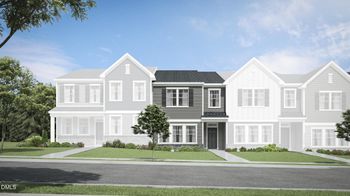
Earlier detached-home builder phases have sold out. As of October 2026, the developer identifies Tri Pointe Homes at Mews at Holding Village as its remaining builder offering, with two- and three-story townhomes featuring garages. That does not mean resale detached homes are unavailable.
A newer townhome may appeal to someone who would rather spend weekends using parks than maintaining a large yard. Yet a three-story layout brings a different consideration: how often will you be going up and down stairs between the garage, kitchen, bedrooms and laundry?
Association responsibilities need similar scrutiny. A townhome advertised as low-maintenance does not necessarily mean every exterior component is maintained by the association.
Holding Village's lake, pool, parks and trails are relevant community features, but buyers should verify the access rights, fees, rules and maintenance obligations attached to the particular property they are considering.
An older home may demand more maintenance but offer proximity to established streets. A detached home in a larger subdivision may provide a different balance of interior and outdoor space. A newer townhome can reduce some maintenance tasks while introducing association costs and a more vertical floor plan.
Wake Forest offers several outdoor destinations that provide a change of scenery without requiring a trip into Raleigh.
E. Carroll Joyner Park, at 701 Harris Road, is among the town's major public spaces. The 117-acre park includes restored farm buildings, a pecan grove, gardens, an amphitheater and three miles of paved trails.
It's a different experience from the greenway connections around Heritage. Joyner Park is a destination in its own right, while a neighborhood greenway may be more useful for a regular walk directly from home.
Wake Forest Reservoir provides another contrast. Its natural-surface trail extends 1.6 miles one way along the western shore. It is not a complete loop around the water, and the town prohibits crossing the spillway.
That matters if you're imagining a long circular walk around the lake. The actual route is an out-and-back trail, with a different surface and experience from the paved paths at Joyner Park.
The broader greenway network reaches into neighboring communities, although some planned connections remain incomplete. Buyers should check the town's existing trail descriptions and maps rather than assuming every proposed connection is ready to use.
Falls Lake State Recreation Area also provides hiking, boating and other outdoor opportunities within the broader region. Its separate access points are spread over a large area, so the drive depends on which entrance you intend to use.
Wake Forest sits north of Raleigh, making the city and surrounding employment centers part of the picture for many prospective residents.
But commuting from Wake Forest to North Raleigh is not the same as commuting to downtown Raleigh or Research Triangle Park.
Capital Boulevard, or U.S. 1, is a major connection toward Raleigh and I-540. NC 98, South Main Street and Rogers Road shape trips through other parts of the town.
For example, a buyer working in North Raleigh might find that access to Capital Boulevard is the most important transportation consideration. Someone commuting toward RTP may place greater weight on reaching an efficient westbound connection.
Two homes separated by only a few miles can produce different trips because of their approaches to intersections and major roads.
The choice also affects errands. One location may have a convenient drive to groceries but require crossing town to reach other services. Another may be closer to downtown restaurants while putting a daily workplace farther away.
Rather than relying on a single advertised drive time, test a prospective home's commute at the times you expect to travel. Do the same for a few recurring destinations.
A Saturday afternoon drive can make a location look easier than it feels during weekday traffic.
Wake Forest has public transportation, although it is not an extensive regional transit network.
Go Wake Forest is an on-demand microtransit service operating within town limits and portions of Raleigh's Wakefield area. Riders request trips using an app or by telephone.
As of October 2026, single-rider fares range from $2.50 to $4.50 based on trip distance. Sunday service began October 4, initially with limited capacity.
One important limitation is that rides cannot be booked in advance. Someone with a fixed appointment time needs to allow for the uncertainty of requesting an on-demand trip.
The Wake Forest–Raleigh Express, or WRX, provides another option. Its August 2026 weekday schedule includes two direct morning trips from Wake Forest to the Union Station Bus facility in downtown Raleigh and two direct evening return trips. Other WRX service connects Wake Forest with Triangle Town Center, a shopping center and park-and-ride location in north Raleigh. Riders using those trips need to transfer to continue downtown.
This could work for someone whose schedule matches the direct service. It is less convenient for irregular hours or destinations away from the transit connections.
The practical question is whether a particular home gives you reliable access to the transportation you need, not merely whether a transit service exists somewhere in town.
Wake Forest has several housing types, and their prices and ownership expenses vary considerably.
According to Redfin, the town's median home sale price was approximately $443,100 over the three months ending September 2026.
That is a useful town-wide benchmark. It is not a typical asking price for every community, nor does it describe what a buyer should expect to pay for a particular size or style of home.
An older property near downtown and a newer townhome can also produce different monthly expenses even when their purchase prices are similar.
A home with more land may bring greater yard upkeep. An older house may have more immediate maintenance needs. A townhome may shift some responsibilities to an HOA while adding a recurring assessment.
The comparison should include mortgage principal and interest, property taxes, insurance, HOA dues, utilities and a reasonable maintenance allowance. If taxes and insurance are escrowed in a mortgage payment estimate, avoid counting them a second time.
Wake Forest extends into both Wake and Franklin counties, and some addresses with a Wake Forest mailing designation lie outside municipal limits.
For properties inside town limits, the general 2026 combined county-and-municipal property-tax rates are:
| Location | Rate per $100 of assessed value |
|---|---|
| Wake Forest in Wake County | $0.9571 |
| Wake Forest in Franklin County | $0.9250 |
At an assessed value of $400,000, those rates correspond to approximately $3,828 and $3,700 annually, respectively, before any additional applicable district taxes, assessments or fees.
The calculation uses assessed value, not the advertised purchase price. The rates also do not apply to every property with a Wake Forest postal address.
The Franklin County tax schedule and Wake County tax information provide starting points for checking a parcel.
There is an especially important timing issue for buyers looking in Wake County. The county's next property revaluation takes effect January 1, 2027.
Future bills will reflect the newly assessed values and the rates subsequently adopted by elected officials. A seller's existing tax bill is therefore not a dependable long-term estimate.
Not every Wake Forest home receives electricity from the town.
Electric providers in the area include Wake Forest Power, Duke Energy Progress and Wake Electric. The town provides an electric-provider lookup so residents can identify the applicable service territory.
The City of Raleigh owns and operates the public water and sewer system serving Wake Forest's designated urban service area. Buyers should confirm the actual property's connections rather than assuming that public water and sewer are available everywhere in the postal area.
Wake Forest also assesses a stormwater utility fee on properties inside municipal limits.
Published residential tiers are $44, $121 and $231 annually, based on the amount of impervious surface, such as roofs and driveways. The billing treatment for townhomes, condominiums and other property types may differ, including charges handled through associations.
For a buyer deciding between a detached house and a townhome, the more useful figure is the total annual cost of ownership, not the HOA fee or property-tax rate considered in isolation.
The same county boundary that affects property taxes also determines which public school district serves a home.
Wake County residents use the Wake County Public School System, while Franklin County residents use Franklin County Schools.
For Wake County properties, the WCPSS assignment lookup identifies base elementary, middle and high schools by residential address. It also provides calendar and transportation information.
Franklin County Schools offers enrollment and school-location resources for addresses within its district.
Buyers should verify an assignment using the actual residence, not a listing description or the nearest school on a map.
Assignments can also change. As of October 18, 2026, WCPSS had released a draft 2027–28 enrollment proposal, with a final board vote expected in November. A proposed assignment is not the same as an approved future assignment.
Other public services have similar geographic distinctions. A Wake Forest mailing address does not automatically establish eligibility for town-provided solid-waste services, Go Wake Forest transit or a particular utility provider.
Before choosing between homes near a jurisdictional boundary, establish the county, municipal status and applicable service areas for each address.
New development has brought more housing and commercial activity to Wake Forest, but it also means that parts of town are still changing.
A road shown on a subdivision plan may already exist, be under construction or remain years away. The same is true of nearby commercial projects and greenway connections.
The Holding Village developer has constructed the South Franklin Street extension from Artisan Park Drive to NC 98, also known as Dr. Calvin Jones Highway.
The town's South Franklin Street Widening project describes separate work between Rogers Road and Artisan Park Drive to expand the existing two-lane roadway into a four-lane divided street with sidewalks and multi-use paths.
The completed extension should not be confused with a declaration that the entire widening project is finished.
Much larger transportation changes are also in planning.
NCDOT is developing a Capital Boulevard (U.S. 1) upgrade from I-540 to the Purnell Road/Harris Road area in Wake Forest. The proposed controlled-access roadway would use interchanges rather than direct private-driveway access, with service roads providing access in some locations. Changes to crossings and approaches could affect how residents reach homes and businesses near the corridor. Construction is currently scheduled to begin in 2031 for the first two segments and 2033 for the later segments.
Those schedules are tentative. The project is not a current improvement to daily commuting.
Wake Forest is also planning a future mobility hub associated with the S-Line passenger rail corridor. Federal funding and planning have advanced, but the proposed passenger-rail service is not operating in Wake Forest today.
These projects are important to the town's long-term development. They should not be treated as guaranteed benefits that will arrive on a particular date.
A wooded parcel or vacant tract can make a property feel more secluded than its surroundings may eventually become.
The town's Development Activity Dashboard provides information on projects under construction, in review and approaching public hearings.
Before buying near undeveloped land, look at the status of nearby proposals. A conceptual plan is not the same as an approved development, and approval does not guarantee an exact construction schedule.
Still, checking that information can reveal issues worth investigating before you buy, such as proposed road connections, commercial buildings or changes to adjoining land.
The combination of older housing, newer construction and varied terrain makes property-specific due diligence important throughout Wake Forest.
A historic home may need investigation into aging building systems. A newer home may have questions involving grading, drainage, retaining walls or association-maintained infrastructure.
Flood exposure is another consideration.
The town's flood-hazard resources direct buyers to North Carolina and FEMA mapping tools for information about individual properties.
A home outside a mapped high-risk floodplain can still experience surface-water or drainage problems. Standard homeowners insurance does not cover flood damage, so buyers should review actual insurance options rather than treating the flood map as a complete assessment of risk.
Pay attention to how water moves across the lot, where it drains and whether neighboring land is higher or lower. Nearby creeks, ponds and wooded drainage corridors can be attractive features, but their presence alone does not establish how the property performs during heavy rain.
Likewise, confirm what an HOA maintains, what exterior changes are permitted, and whether the home depends on public or private utility systems.
The community description tells you something about the surroundings. The inspection, disclosures, insurance review and property documents tell you about the home you would own.
Wake Forest can be a good place to live for buyers who value its mix of established and newer neighborhoods, enjoy access to outdoor recreation and are comfortable driving for many everyday trips. It may be less suitable for someone who needs a consistently short commute to downtown Raleigh or Research Triangle Park, or who expects to handle most errands on foot.
Ongoing construction changes parts of town, while ownership costs and public services vary according to the property's actual location.
Those differences make Wake Forest difficult to judge from one weekend visit or one neighborhood.
A useful comparison starts with the routines that matter most.
Visit downtown on a Saturday, but also drive through it on a weekday. Walk a greenway you expect to use. See how a prospective home's location relates to groceries, appointments and work. Compare the maintenance responsibilities of an older house with those of newer construction.
Then check the facts that aren't obvious during a showing: municipal boundaries, school assignments, property-tax assessments, association documents, utility service areas, flood exposure and nearby development plans.
The right home is the one whose location, expenses and everyday routines make sense together.
If Wake Forest sounds like a good fit, you can browse Wake Forest homes to explore what's available. Have a question about a particular location or property? Ask our Raleigh Realty team.
Cover: AI-edited adaptation of a White Street photograph by Rysnap1024 (2019), CC BY-SA 4.0. Headline and Raleigh Realty branding added; the adapted cover retains that license.
Updated October 19, 2026.