New - 1 Hour Ago




Starting January 7, some of the country's largest housing investors could be barred from buying existing homes in Raleigh and across the Triangle. For someone competing against an investment company to buy a house, that could mean one fewer bidder.
But there's a catch. Those same investors won't be required to sell rental houses they bought before July 11, 2026. And under certain exceptions, they can continue buying homes, including qualifying newly built rental properties.
That's the divide behind the U.S. Treasury Department's October 22 announcement of proposed regulations implementing the 21st Century ROAD to Housing Act.
Congress enacted the restrictions on July 11, 2026. The purchase prohibition is scheduled to take effect January 7, 2027, although Treasury's proposed implementation rules are not yet final.
The goal is to give individual homebuyers more opportunity to purchase houses rather than compete with large investment operations. Whether that makes a noticeable difference in Raleigh will depend on something less obvious than how many rental homes investors own: how often those investors are actually buying the same properties individual buyers want.
Consider a homeowner selling a detached house in Raleigh.
One prospective buyer plans to live in the property. Another is a large investment operation that wants to add the house to its rental portfolio.
Beginning January 7, the investment company could be prohibited from making that purchase—or even entering into a contract to make it—if it meets the law's definition of a large institutional investor and no exception applies.
That could change the competition for the individual buyer.
Now suppose the competing purchaser is a small landlord who owns several rental houses. Or it's someone buying an investment property through a limited liability company, commonly called an LLC.
Those buyers aren't automatically prohibited.
Under the enacted federal law, the restriction generally applies to for-profit investment operations exercising direct or indirect investment control over at least 350 qualifying single-family homes.
Those homes can be located anywhere in the country. A company doesn't need to own 350 houses in Wake County to qualify.
The law also looks beyond the name appearing on a property deed. Investment management authority, ownership relationships and certain arrangements involving affiliated entities can establish control. Homes acquired through specified exempt purchases after enactment are excluded from the statutory count.
That matters because a large investment operation might hold properties through numerous separate companies. Conversely, a small local landlord using an LLC doesn't necessarily have anything in common with a nationwide institutional portfolio.
The definition of a covered home is specific, too. It generally includes residential structures with one or two dwelling units, which can include qualifying detached homes and townhomes. Federally defined manufactured homes are excluded.
So a Raleigh buyer shouldn't expect every investor to disappear from the competition. The potential benefit comes when a covered large investor would otherwise have purchased the particular home that buyer wants.
A March 12, 2026 analysis by the AEI Housing Center and U.S. Chamber of Commerce estimated that institutional investors held approximately 2.3% of Wake County's single-family housing stock and 1.3% of Durham County's.
The estimates appear in the Wake County and Durham County housing playbooks. They measure homes already owned, not the share of recent purchases the January restriction would have prevented. A company might hold its rentals for years without making another offer, while another investor might buy regularly in a narrow segment of the market.
The reports also classify institutional ownership using a threshold of roughly 100 properties, not the law's investment-control test of at least 350 qualifying homes. Their underlying sources include older data, such as 2021 five-year American Community Survey microdata. March 2026 is the publication date, not the measurement date of every input.
Research from the Federal Reserve Bank of Richmond, published in the fourth quarter of 2024, distinguishes individual landlords, smaller corporate owners and institutional investors. Their activity and geographic patterns aren't interchangeable, and that historical research doesn't count the Triangle purchases subject to this law.
Treasury acknowledges in the proposed rule's economic analysis that reliable data aren't currently available to determine how many investors and entities may be affected. The county ownership estimates therefore can't tell a buyer how many competing offers will disappear or support a forecast of lower Raleigh home prices.
The Town of Rolesville's Wallbrook development records describe 140 attached townhomes on Lot 6 of the South Main Street project. The town identifies Lennar as the builder and CRP/C4 WALLBROOK VILLAGE OWNER LLC as the owner of the for-lease community, with construction identified for 2025 and 2026.
These are newly built townhomes intended for rental housing, not individual home sales.
Under the ROAD to Housing Act, qualifying build-to-rent purchases are an exception to the institutional-investor restriction.
Treasury's proposed regulations would establish additional conditions. Among them, a home must not previously have been occupied by an owner-occupant, must be purchased within 18 months of receiving its certificate of occupancy or equivalent, and must first be occupied after that purchase by renters.
Those details are still proposed, but the underlying build-to-rent exception is already part of the statute.
The Wallbrook records don't establish whether its owner meets the federal definition of a large institutional investor or whether a particular transaction qualifies for an exception.
Wallbrook shows why building homes for rent differs from buying existing resale homes to rent out. A new institutional rental community in the Triangle wouldn't, by itself, establish a violation after January 7; its owner and any relevant purchase would still have to meet the applicable rules.
Suppose a large investment company bought dozens of rental houses in Wake and Durham counties before July 11, 2026. The statute explicitly says it doesn't have to sell those homes when the purchase restriction takes effect. It also allows specified ownership restructurings and transfers between qualifying institutional investors.
The law also contains a temporary exception allowing certain purchases from investors who aren't covered by the restriction during the first two years after it takes effect. That provision has its own seller and transaction requirements; it doesn't exempt every purchase from an ordinary homeowner.
Other exceptions preserve specified investment activities, including certain transactions involving mortgage defaults or debt arrangements, qualifying senior communities and programs intended to expand homeownership.
For renters, some of those homeownership programs could matter.
One statutory program category includes a right of first refusal and a 30-day first-look opportunity for qualifying renters. Treasury's proposal addresses contractual mechanics and other program conditions.
But that isn't a universal right for every tenant to buy the house they're renting. The particular program and transaction must satisfy the applicable requirements.
Another exception could affect older homes with substantial building problems.
Consider a property with serious structural deficiencies or failing core systems. It might require extensive rehabilitation before it can meet applicable building-code requirements.
The statute permits qualifying renovate-to-rent purchases involving those kinds of deficiencies, provided the required improvements amount to at least 15% of the defined home purchase price.
Treasury's proposed regulations explain how that price would be calculated, subtracting the tax-assessed value of the land from the total property purchase price. They also propose a substantial-rehabilitation safe harbor requiring both that all material structural or core-system deficiencies be resolved and that at least 10% of the defined home purchase price be spent on that structural or core-system work.
That proposed 10% safe harbor doesn't replace the separate requirement that total improvements amount to at least 15% of the defined home purchase price.
The distinction matters because ordinary remodeling isn't necessarily substantial rehabilitation under the law. Painting walls, replacing flooring or updating countertops wouldn't, by themselves, establish eligibility for the exception.
For an individual buyer interested in a house needing renovations, the existence of this exception means a qualifying large investor might still be able to compete for some distressed properties.
The property's condition, the work required and whether the transaction satisfies the statutory and regulatory tests would determine the result.
The same restriction that could remove a competing bidder for a Raleigh buyer could leave a seller with one fewer eligible purchaser. That matters when a covered institutional investor would otherwise have bought the home and no exception applies. Sellers whose homes primarily attract individual buyers may see less change.
But a cash offer—or a direct offer from a company that buys houses—isn't automatically prohibited. HomesRaleigh's comparison of an Opendoor offer with listing a Raleigh home explains the practical tradeoffs between those selling options. It doesn't establish whether a particular company or purchase falls under the new federal restriction.
If a specific offer raises a genuine question about eligibility, the seller may need transaction-specific legal guidance. The announcement alone isn't a reason for Raleigh homeowners to rush to sell before January or postpone selling afterward.
There are two dates to keep separate.
January 7, 2027 is when the federal purchase restrictions and enforcement provisions are scheduled to take effect.
November 23, 2026 is the deadline for public comments on Treasury's proposed regulations, which were published in the Federal Register on October 23.
Treasury describes the current proposal as the first phase of implementation. Further rulemaking may address additional exceptions, reporting, recordkeeping, compliance and enforcement.
Congress has already enacted the prohibition and its principal exceptions, but the proposed implementation details remain unsettled. The published proposed rule provides the regulatory text and the public comment record.
The new restriction's impact in Raleigh won't be measured by how many homes large investors already own. It will turn on the purchases covered investors no longer make—and whether those were the same houses individual buyers wanted.
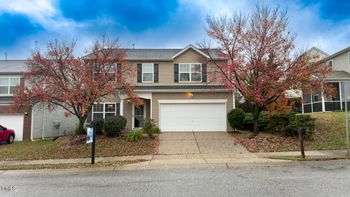
Conceptual illustration about homebuying policy. No actual property, investor transaction or government determination is shown.