New - 30 Mins Ago
$645,000
Active
--
Beds
--
Baths
--
Sqft
1.63
Acres
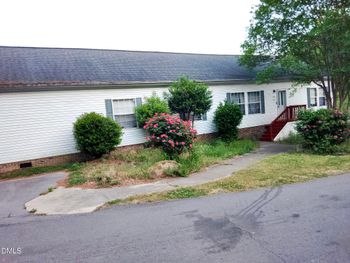
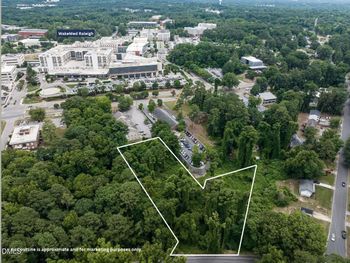
2802 Milburnie Rd Lot 1, Raleigh, NC 27610
MLS#: 10201232



Say you own a house in North Raleigh near Falls of Neuse Road. The roof is getting older, you're thinking about your next move, and you want to know whether selling to Opendoor would be easier than putting the house on the market.
Opendoor gives you an estimated purchase price. A real estate agent suggests a higher listing price. At first glance, the difference seems straightforward. But the Opendoor figure may change after the company assesses your property, and the listing price isn't money a buyer has agreed to pay.
What matters is how much each sale could leave you after expenses and mortgage payoff, when you could use that money, and what you'd need to do before moving.
Opendoor is the prospective buyer in a direct sale. Raleigh Realty would represent you under an agreed listing arrangement if you chose to market your property. HomesRaleigh is Raleigh Realty's sister site, and this comparison is written from that brokerage's perspective, not Opendoor's.
To make a useful comparison, put your assessed written Opendoor cash offer alongside a dated, property-specific listing estimate. Neither an online home value nor the price of another house establishes what yours will sell for. This guide concerns Opendoor's regular cash sale, not its separate Cash Now, More Later program.
The purchase price is where you start, not necessarily what you'll take home.
Opendoor charges a service fee, may make deductions based on property condition, and accounts for closing expenses. Its offer-breakdown guide, updated March 10, 2026, says the service charge varies by property and market. There isn't a published fixed percentage that applies to every sale.
That makes your written breakdown more useful than a fee percentage quoted in an older article or reported by another homeowner.
The document also needs some careful reading. Opendoor combines condition-related repair deductions and estimated closing expenses under Estimated Standard Costs. Its display may use the heading Estimated Net Proceeds before showing additional deductions. That label alone doesn't establish either the purchase price or the final amount you'll receive.
Think about the roof on that North Raleigh house. Opendoor might account for its condition through a repair deduction rather than require you to hire a roofer before selling. That saves you from arranging the work, but the deduction still reduces the financial result.
Before accepting, identify these amounts and conditions in the offer:
Ask Opendoor to explain any charge you cannot reconcile with the purchase agreement. A repair amount already included in Estimated Standard Costs shouldn't be subtracted again. Neither should a mortgage payoff already reflected in a final proceeds calculation.
Have the closing attorney or settlement professional confirm the applicable payoff and what you should expect to receive.
Yes. An initial estimate and an assessed written offer are not the same thing.
Opendoor's home assessment documents the property's condition before the assessed cash offer is prepared. Depending on the property and market, this may involve photographs submitted through its Key App or an in-person visit. Not every Raleigh property follows the same assessment process, and not every home qualifies for an Opendoor purchase.
Suppose the initial estimate didn't fully account for worn flooring or an aging HVAC system. The assessment could lead to a lower offer. Documented improvements or other updated information could also change the company's valuation. Opendoor says its assessed offer may move in either direction.
There's a second distinction worth understanding: Even after signing, a proposed purchase price may not be the last word.
According to Opendoor's cancellation guidance, the company may inspect the home after you sign, even though it has already assessed the property to prepare its offer. If that later visit uncovers previously unidentified problems, Opendoor may propose revised repair costs or purchase terms.
Opendoor says a seller may decline those changes and cancel before closing without an Opendoor cancellation fee. That describes the company's published policy, not a guarantee about every obligation under a particular signed contract or any outside expenses the seller has incurred.
Before signing, ask what remains subject to review, what could change, and what happens if you disagree with a revision. An assessed offer is a substantially better starting point than an early estimate, but it isn't an unconditional price or closing guarantee.
Listing has a different uncertainty: you won't know the eventual buyer's price until you negotiate a sale.
That's why a useful listing estimate should explain its assumptions rather than simply present an attractive asking price.
For the North Raleigh house, your agent might examine recent closed sales involving homes of similar size, age and condition. If a nearby house sold for more but had a newer roof and updated kitchen, that difference needs to be accounted for. The higher sale price isn't automatically evidence that your house will bring the same amount.
The relevant details change with the property. For a Brier Creek townhome, association dues, maintenance responsibilities, floor plan and condition could affect both the comparable sales and the costs of holding the property while it is marketed.
Ask your agent which closed sales support the estimated price range and how the important differences were handled. Active listings show what other sellers are asking, not what buyers have paid.
Then ask for a written estimate of expenses. That should include negotiated brokerage compensation, any buyer-broker compensation you agree to pay, preparation work, anticipated repairs or buyer credits, closing costs and the expected cost of owning the home until closing. Check whether the quoted brokerage amount already includes buyer-broker compensation or whether you would pay it separately, so you don't count the same expense twice.
There is no standard real estate commission rate. The North Carolina Real Estate Commission states that compensation is negotiable between a brokerage and its clients.
An Opendoor sale can also involve a real estate agent. Its published agent program describes arrangements that include an agreed commission and a possible Opendoor-paid bonus. That doesn't establish that Raleigh Realty participates in such an arrangement. If an agent represents you in either transaction, ask who pays that agent, what compensation has been agreed upon, and whether another party offers an incentive. North Carolina's brokerage rules address disclosure of applicable third-party compensation and incentives.
With a listing estimate in hand, consider two possible outcomes.
The first uses a sale price and closing date your agent believes the evidence supports. The second assumes a lower offer or a later closing. Could you still make your move work under those conditions?
That second scenario matters because the sale doesn't end when a buyer makes an offer. Inspection negotiations may lead to repair requests or credits. Financing, appraisal or other contractual issues can affect the transaction. Depending on the agreement, a buyer may also have termination rights.
The listing alternative offers access to buyers in the market, but its eventual price and closing date remain uncertain until the transaction is completed.
Here's a made-up example showing why the higher sale price doesn't tell the whole story.
These figures are illustrative only. They are not an actual Opendoor offer, a Raleigh market forecast or a standard fee comparison.
| Direct sale to Opendoor | Listed sale | |
|---|---|---|
| Assumed purchase or eventual sale price | $400,000 | $425,000 |
| Assumed total selling expenses | $30,000 | $38,000 |
| Amount after those expenses, before mortgage payoff | $370,000 | $387,000 |
The listed-sale expense assumption includes preparation and the assumed additional wait, not just charges deducted at closing. The direct-sale expense assumption represents its total applicable selling expenses. Neither figure is an itemized quote.
Under these assumptions, the listed sale comes out $17,000 ahead before mortgage payoff.
The example doesn't establish that listing produces more money. A different offer, repair adjustment, negotiated commission, buyer concession or closing date could change the outcome.
There's also a distinction between the overall financial result and the amount deposited after closing. If you pay for painting before listing, that money has already left your account. It affects what you gain from selling, but it won't necessarily appear as a deduction on the final closing statement.
Conversely, closing expenses deducted from sale proceeds reduce the amount disbursed. Track costs paid in advance and costs due at closing separately, then count each one only once in the overall comparison.
North Carolina's conveyance excise tax provides a concrete example. Under state law, a taxable conveyance carries a tax of $1 per $500, or fraction thereof, of taxable consideration or value, subject to exemptions. A fully taxable $400,000 sale would produce an $800 tax; a $425,000 sale would produce $850. Those charges belong in the applicable expense estimate, not on top of a total that already includes them.
You'll also need a payoff amount for each proposed closing date.
Your current mortgage balance may differ from the actual payoff because of accrued interest and other applicable charges. The Consumer Financial Protection Bureau explains the difference. Obtain a dated payoff from your lender rather than assuming the balance on your latest statement is the final figure.
A later closing introduces another complication.
You still have to make your monthly mortgage payments, which matters when you're planning your cash needs. But those payments aren't entirely an economic cost of waiting. The principal portion reduces your debt; interest is a borrowing expense. Property taxes, insurance, utilities and association dues may also continue.
For the financial comparison, account for the interest and other ownership expenses during the additional period while recognizing that principal payments reduce the remaining loan balance. If property taxes or insurance are paid through mortgage escrow, don't count those same amounts again as separate expenses.
The same principle applies to the estimated Opendoor proceeds: if the final figure already includes a mortgage payoff deduction, don't subtract that payoff a second time.
The $370,000 and $387,000 figures above are therefore comparison amounts before payoff, not promises of money available from closing. To estimate the cash you'll actually receive, reconcile the expected transaction proceeds, unpaid closing charges, mortgage payoff and other obligations for each date. Keep track of money you've already spent so the overall outcome remains accurate.
A higher possible sale price may not help if you're relying on the proceeds to complete your next purchase and the money arrives too late.
Suppose your next closing is on a Friday. You wouldn't want to assume proceeds from a Thursday sale will automatically be available the following morning.
Opendoor's closing-date guidance, updated July 9, 2026, says a closing more than 30 days after signing may involve an extended-closing fee. The company describes a typical maximum window of 60 days, but individual dates require approval. Changes also require a contract amendment, and title work must be ready.
Its funding guidance says the seller's wire typically arrives one to three business days after closing, depending on bank processing. Closing the sale and having cleared funds available are different events.
Check your actual closing date, any associated fee, the final settlement statement and the expected availability of the funds. If those proceeds are needed for another purchase, ask your lender and closing professionals what timing will work.
With a traditional listing, you first need to find a buyer and reach an agreement. The transaction then has to progress through inspections, financing, title work and closing. Your agent can estimate the likely timing, but the actual contract and circumstances control.
A direct purchaser may reduce some of the uncertainty associated with finding and negotiating with a buyer. That doesn't eliminate conditions or guarantee that every selected closing date will hold.
Closing and moving aren't necessarily the same date.
Opendoor's late-checkout guidance describes an optional arrangement allowing a seller to remain in the property for up to 17 days after closing under a separate agreement.
The arrangement carries a daily occupancy charge and a refundable security deposit withheld from closing proceeds. Utilities remain the seller's responsibility until move-out. The deposit may be reduced for applicable condition or removal charges.
Opendoor asks sellers to arrange late checkout before closing, preferably through the dashboard at least seven days ahead, or by contacting their advisor when closer to the date.
There's an important distinction between the ordinary occupancy charge and staying beyond the agreed date. Opendoor's published terms specify a $750-per-day overstay charge, which can also apply to approved additional days, subject to the agreement's conditions and deposit-related limits. Extensions aren't guaranteed.
That can matter considerably if the moving company is delayed or your next home isn't ready. The ability to stay a few extra days isn't free, and the security deposit isn't money you can use for your next purchase while it's being held.
A listed sale may also involve negotiating possession or another occupancy arrangement with the buyer. Whatever you agree to, the dates, obligations and charges need to be in writing.
Money and timing aren't the only differences between these choices. There's also the practical experience of selling your home.
With Opendoor, you may avoid preparing for repeated buyer showings and managing negotiations with multiple prospective purchasers. You still need to provide accurate property information, complete the applicable assessment and diligence steps, and satisfy the contract's handover requirements.
For the North Raleigh house with an aging roof, a direct sale might mean accepting a condition deduction instead of coordinating roof work yourself. That could be valuable if you're moving out of state or juggling the sale with a new job. But you'd want to understand the size of the deduction before deciding that avoiding the work is worth it.
Listing involves a different set of choices. An agent may suggest cleaning, modest repairs, professional photography or more extensive improvements. You'll need to decide when the property is available for showings and whether you'd need to leave during those appointments.
Not every improvement is necessary. You might decide to make a few visible repairs, offer the home in its current condition, or take on larger work if the evidence supports the expense. Ask how each approach affects the proposed price and marketing strategy.
Selling directly doesn't necessarily mean selling without condition-related costs. Listing doesn't mean you're required to renovate.
What matters is the work you're willing to do, the effect it could have on your proceeds and the time you have available before moving.
By this point, you should have more useful information than two competing sale prices.
For Opendoor, you want an assessed written offer with all deductions, remaining conditions, closing charges and occupancy arrangements explained. For listing, you want a dated sale-price range based on relevant closed sales, realistic selling expenses, preparation choices and more than one possible closing scenario.
Then consider your own priorities.
If reducing showings, repair coordination and marketing uncertainty matters most, a direct sale may be attractive when the written terms meet your financial and moving needs.
If you have time to prepare the home, accommodate showings and negotiate with buyers, listing may be worth considering. It allows you to test what buyers will offer, but it doesn't guarantee that your home will sell for the estimated price or close on the projected date.
Neither method always produces more money, closes sooner or involves fewer problems.
Before signing either agreement, have your attorney explain termination rights, unresolved conditions, contractual deadlines and the consequences of missing closing or possession dates. Make sure promises about price adjustments, repair credits, extensions or occupancy are reflected in the written documents.
If you already have an Opendoor proposal, ask Raleigh Realty to compare your written offer with a listing estimate. You can share the property address, dated offer breakdown and the closing and move-out dates you're considering. Leave bank account numbers and other sensitive financial identifiers out of an initial message.
We can review comparable sales, estimated listing expenses, preparation choices and possible timing, then help you identify questions for Opendoor or your closing attorney. Neither an estimate nor a proposed sale date is a guarantee.
You can also learn more about selling a home with Raleigh Realty or use our preparing-to-sell guide to consider which work is worth discussing before you list.
If you haven't received a listing estimate yet, request a free, agent-reviewed comparative market analysis. It considers your home's condition, relevant sales and competing properties rather than providing an instant or guaranteed sale price.
The goal isn't to find a universal winner between Opendoor and a real estate agent. It's to understand what each choice would mean for your money, your move and the work you're prepared to do.
Information reviewed and updated October 21, 2026. Company policies and individual transaction terms may change. Review the agreements and current fee breakdowns applicable to your sale.