New - 8 Hours Ago





Raleigh and Durham can both belong in your home search. Raleigh is a sensible place to start if your regular trips center on downtown Raleigh or its nearby destinations. Durham deserves the same attention if you need to reach a particular Duke workplace, downtown Durham or places farther north and west. For a job in Research Triangle Park, compare the actual routes from both cities before choosing one.
The more revealing comparison is between homes you could buy. Two listings at the same price can come with different taxes, association dues, repair needs and journeys to work. Below, you can compare a 2026 property-tax example, explore homes using the same price ceiling and build a short list around the places you want to reach.
Research Triangle Park, usually shortened to RTP, is a large research and business park with many separate employer locations. A route to its map label may end well short of the building, parking lot or entrance you use. The same problem appears with a search for “near Duke”: Duke University Hospital and Duke Regional Hospital are different destinations in Durham.
Compare the route from each home to the employer's full street address. Then include the last part of the trip: the turn out of the neighborhood, parking and any walk from the parking space. If two people commute, both destinations belong in the comparison. A shorter trip for one person can mean a longer one for the other.
For example, imagine that one buyer travels to downtown Raleigh several days a week while another works in RTP twice a week. Those trips deserve separate tests; the midpoint between the offices does not tell you which home works better. Drive the routes at the times you would normally travel and repeat the return journey. If a route uses a toll road, the NC Quick Pass toll calculator can help you add that charge to the comparison.
For more detail within each city, use our Raleigh relocation guide and guide to living in Durham. They help you select areas to visit once you know which destinations matter.
Two homes can share an asking price without sharing a monthly budget. A citywide cost-of-living average blends those differences together; a lender's payment estimate, property-tax record, insurance quote and association documents reveal them again. That is why a Raleigh–Durham cost comparison becomes more useful as soon as you have actual addresses.
Begin with the same loan assumptions for both homes: loan type, down payment, term and the date of the quote. Ask which taxes and insurance charges are already included in the payment. Then add costs paid separately, so you count each bill once. For an association, the dues matter alongside what they cover. A larger monthly payment may include exterior maintenance that you would otherwise arrange and pay for yourself; the governing documents settle that responsibility.
Repairs change the comparison in a different way. An older roof or heating system may require money soon after closing, while a disclosed special assessment can create a payment on a specific date. Neither fits neatly into an average monthly bill. Keep the recurring budget and the cash needed for known work alongside each other. Our HOA fees and rules guide explains which documents to request, and the closing-cost guide separates purchase cash from ongoing expenses.
For this illustration, use a home assessed at $400,000 inside Raleigh in Wake County and another with the same assessment inside Durham in Durham County. The assessment is the value used for property tax; it can differ from the sale price. These examples combine the respective city and county rates and exclude special districts, additional fees and any tax relief.
| 2026 rate or calculation | Raleigh in Wake County | Durham in Durham County |
|---|---|---|
| County tax per $100 assessed value | $0.5371 | $0.5792 |
| City tax per $100 assessed value | $0.3720 | $0.4371 |
| Combined city and county rate | $0.9091 | $1.0163 |
| Annual tax at a $400,000 assessment | $3,636.40 | $4,065.20 |
| Monthly amount to set aside | $303.03 | $338.77 |
2026 city-plus-county rates. Illustrative equal assessed values; special districts, additional fees and tax relief excluded. Amounts are also shown in the table above.
The difference in this example is $428.80 a year, or about $35.73 a month. That is a useful budget item, but it does not establish that every Raleigh home costs less to own. A different assessment, insurance quote, HOA charge or repair need can change the result. Raleigh and Durham mailing addresses also reach beyond these two particular city-and-county combinations.
The rates come from Wake County's 2026 rate sheet, Durham County's adopted FY 2026–2027 budget and the City of Durham's adopted budget. Before budgeting for a property, confirm its county, municipal limits, assessment and every applicable district or fee with the relevant tax office.
Use each home's own assessment. Divide that value by 100, then multiply by its applicable combined rate. For example, the Raleigh rate above applied to an assessed value of $450,000 gives $4,090.95 in annual city and county tax, before additional charges or relief. A lower rate does not guarantee a lower bill when the assessed values differ.
Raleigh's Pullen Park, at 520 Ashe Avenue, combines playgrounds with attractions including a carousel and train. Durham Central Park has the Mount Merrill play area and a pavilion used by the Durham Farmers' Market. These are different outings, and neither tells you how close a particular home is to the park entrance. Check current attraction hours or event schedules before planning a visit.
If one of those places appeals to you, make it part of the home tour rather than another pin on the map. Travel there from the property, find the entrance and parking you would use, and leave enough time to see whether you enjoy the outing. A place worth visiting across the Triangle can be a good weekend destination without needing to sit around the corner from your home.
The same reasoning applies to a downtown restaurant, grocery store or walking route. “Near downtown” is a broad description. Follow the route from the front door and look at the crossings, sidewalks and return trip. Our Raleigh neighborhood guide and Durham living guide offer more specific starting points; they do not replace checking the address you might buy.
If older architecture draws you to Raleigh, Oakwood's historic district is one place to investigate. Its Victorian-era homes are part of the appeal, and the city's historic designation also brings a separate question about proposed exterior work. Raleigh distinguishes local historic overlay districts from National Register districts; their boundaries and rules are not interchangeable.
That distinction matters when you picture changing windows, adding a porch or building an addition. An attractive house and permission to carry out your plans are separate parts of the purchase. For any Raleigh or Durham home, check the parcel's designation and the applicable planning requirements before treating a renovation as straightforward.
Condition is equally specific. Compare the inspection findings, available permits, repair receipts and contractor estimates at the actual homes. A newly renovated kitchen does not answer questions about drainage or the roof. If an inspection leads to negotiations, our North Carolina inspection-repair guide explains how findings become written requests and deadline decisions.
Both previews below use a $500,000 maximum asking price, with active and coming-soon residential listings in the named city. The amount is an illustration for comparing the searches, not a recommended budget. Asking prices are not sale prices, and the listings have not been screened for commute time, municipal limits, total monthly costs or inspection condition.
Raleigh preview: active and coming-soon residential listings asking $500,000 or less. Compare individual properties' costs, condition and routes.


Durham preview: active and coming-soon residential listings asking $500,000 or less. Compare individual properties' costs, condition and routes.


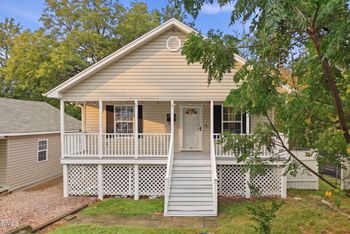

To see more homes or change the budget or property type, open the Raleigh home search or Durham home search and set the filters you need. Our Triangle location explorer also lets you compare places before narrowing your search.
Choose one plausible home in each city, then record the same information for both. If a number or responsibility is still unknown, leave it as a question to resolve rather than filling it with a citywide average.
| What to compare | Record for each home |
|---|---|
| Purchase and loan | Asking price, comparable lender quote and cash needed at closing |
| Recurring bills | Address-specific taxes, insurance, HOA dues and utilities, counted once |
| Known work | Inspection findings, written estimates and when payment would be needed |
| Regular trips | Actual work addresses, travel times you tested, tolls and parking |
| Everyday places | The store, park or other destination you would use and the route to it |
| Responsibilities | Association maintenance, applicable renovation approvals and unresolved documents |
You may find that one city offers more homes you want to tour. You may also find that the particular house changes your first impression of the city. Let the bills, the condition and the trips explain that preference. You will have a clearer reason to book the next tour.
Send Raleigh Realty the two listing links and your questions, along with your price range and regular destinations. We can help you compare the properties, identify unanswered cost or condition questions and arrange the next tours. HomesRaleigh is Raleigh Realty's sister site.
Rates and sources checked October 15, 2026. Cover illustration based on retained Raleigh Realty photographs of Raleigh and Durham.


